

How Pouring Activities Build Essential Life Skills in Preschoolers
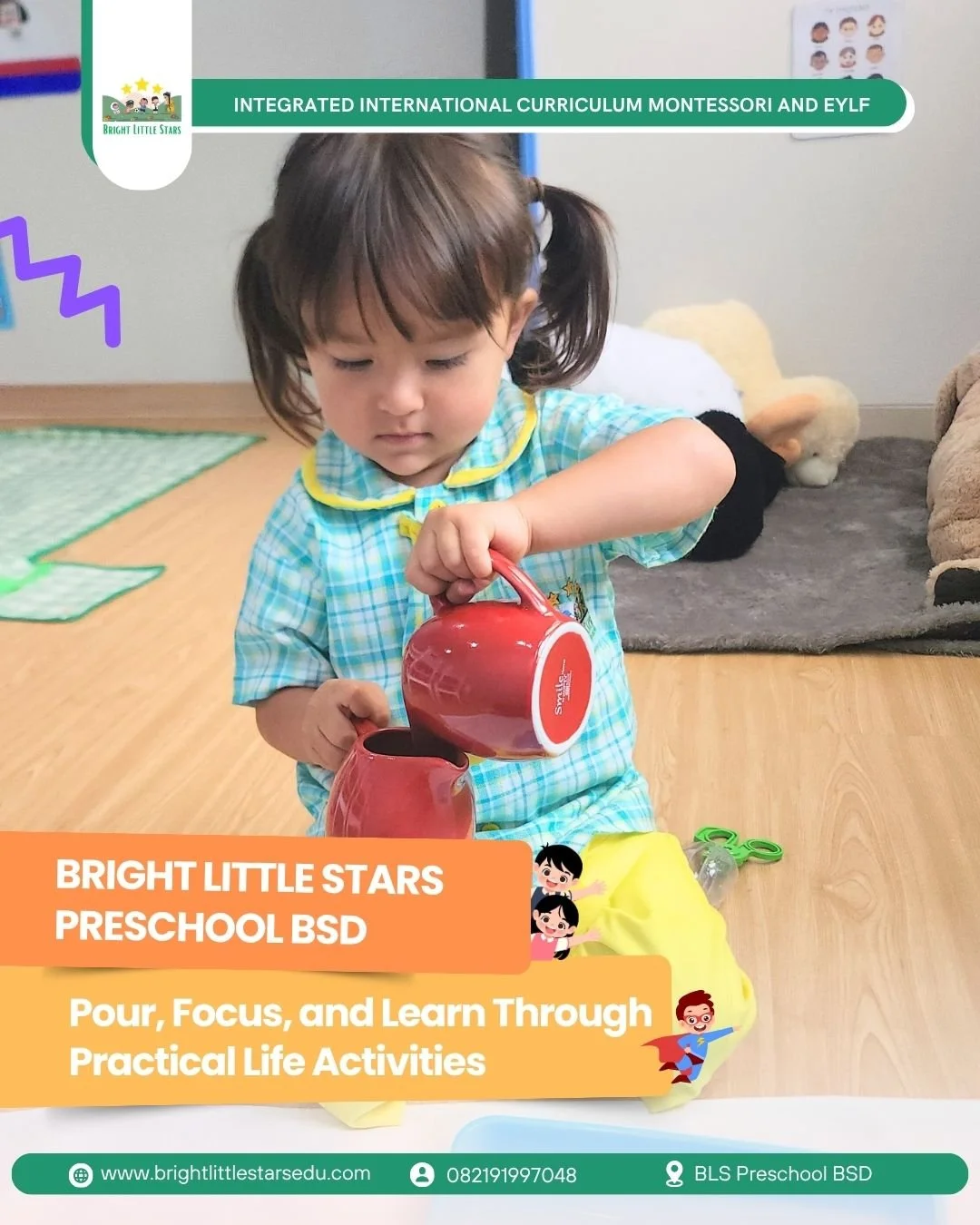
Learning Through Practical Life Activities
Practical life activities are an important part of early childhood education, helping children develop skills that support both their daily lives and future learning. While these activities may appear simple, they provide valuable opportunities for children to build independence, concentration, and confidence through hands-on experiences.
One popular practical life activity is pouring. When children carefully transfer water from one container to another, they are doing much more than playing. They are learning how to control their movements, focus their attention, and complete a task with purpose. These experiences encourage children to become active participants in their own learning journey.
At Bright Little Stars Preschool, practical life activities are designed to help children develop essential skills in a meaningful and enjoyable way. Through activities such as pouring, spooning, sorting, and transferring objects, children strengthen their fine motor skills and hand-eye coordination while also learning patience and responsibility.
Practical life work also encourages children to follow a sequence of steps, make decisions, and solve small challenges independently. As children practice these tasks repeatedly, they gain a sense of accomplishment and develop greater self-confidence.
Perhaps most importantly, practical life activities help children connect learning to real-world experiences. The skills they develop in the classroom can be applied to everyday routines at home and in the community.
By engaging in practical life activities regularly, children build a strong foundation for future academic learning while developing independence, focus, and a positive attitude toward new challenges. These simple experiences often become some of the most valuable lessons in early childhood education.
Building Concentration and Hand-Eye Coordination Through Pouring
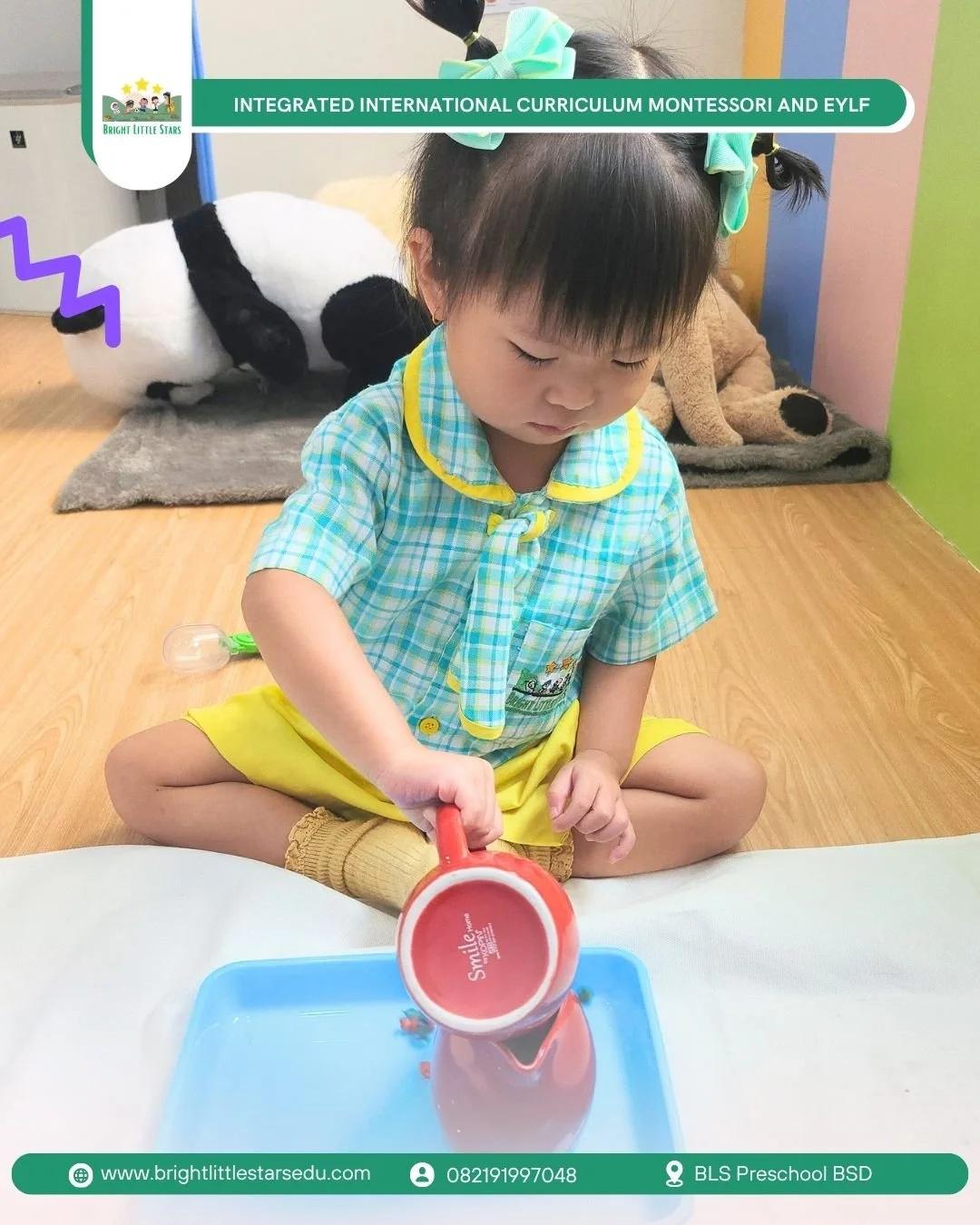
Pouring activities may look simple, but they require children to use a variety of important developmental skills at the same time. As children carefully transfer water from one container to another, they must focus on their movements, control the amount being poured, and observe the results of their actions.
This process helps strengthen concentration, one of the key skills children need for future learning. Young children naturally have short attention spans, so activities that encourage sustained focus are incredibly valuable. When children become engaged in a pouring task, they learn to pay attention to details and remain focused until the activity is complete.
Pouring activities also help develop hand-eye coordination. Children must coordinate what they see with how they move their hands, adjusting the angle of the container and controlling their movements carefully. These repeated actions help refine motor control and improve precision over time.
At Bright Little Stars Preschool, we provide opportunities for children to practice these skills through hands-on practical life activities. Children are encouraged to work independently, explore at their own pace, and repeat activities as often as needed to build confidence and mastery.
Another benefit of pouring activities is that they teach children the importance of patience. Children quickly learn that rushing can lead to spills, while slow and careful movements often produce better results. This helps them develop self-control and an understanding of cause and effect.
Through simple yet purposeful experiences like pouring, children strengthen their ability to focus, coordinate their movements, and approach tasks with greater care and confidence. These foundational skills support success not only in the classroom but also in everyday life.
Developing Strength, Control, and Independence
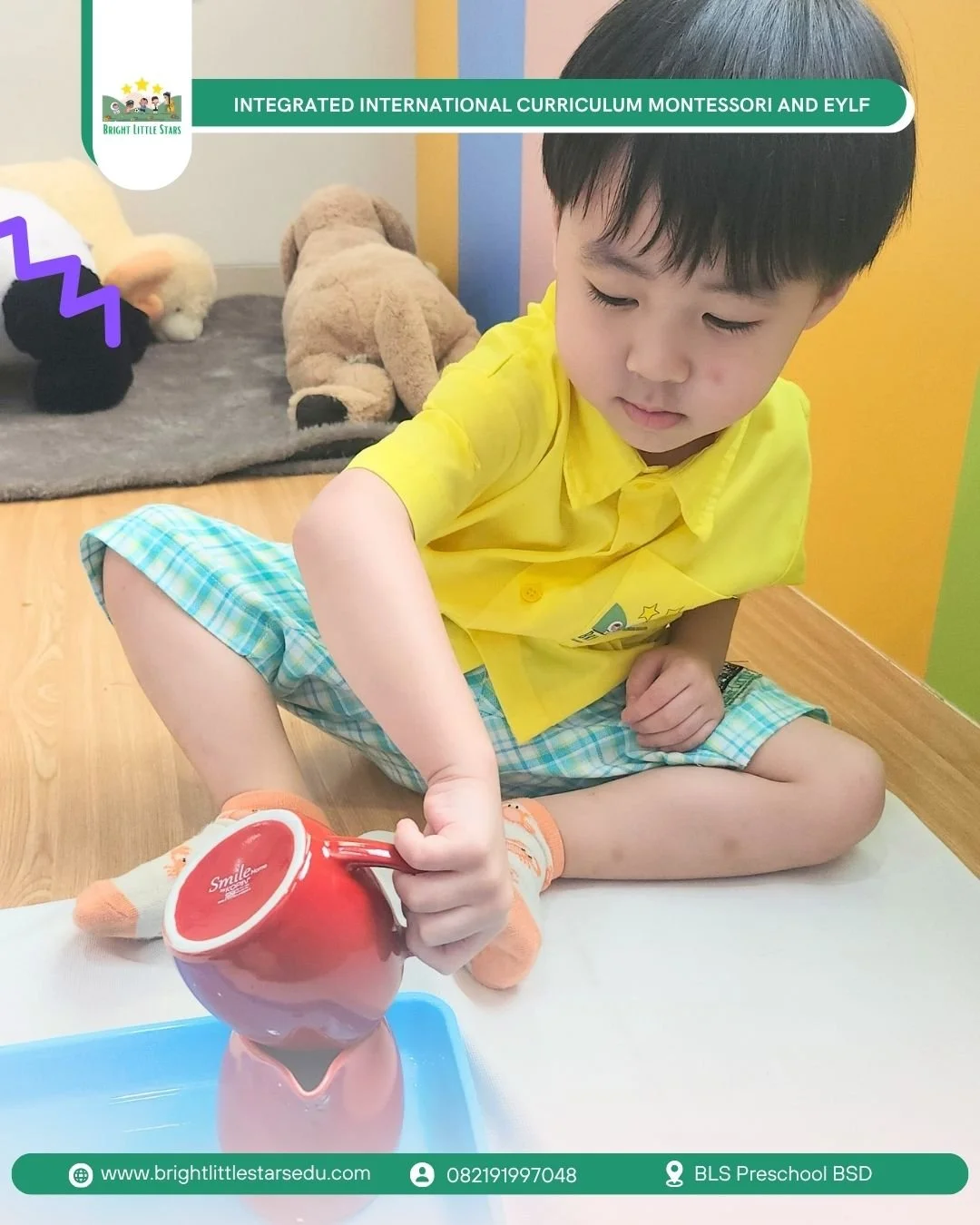
As children become more familiar with pouring activities, they begin to develop greater strength, control, and independence. What may seem like a simple task actually requires children to use several muscles in their hands, wrists, and arms while carefully managing their movements.
Holding and tilting a container filled with water requires stability and coordination. Children must learn how much force to use and how quickly or slowly to pour. Through repeated practice, they gradually gain better control over their movements and become more confident in their abilities.
These experiences also contribute to the development of fine motor skills. Fine motor strength is essential for many future tasks, including drawing, writing, using scissors, buttoning clothes, and handling small objects. Practical life activities provide children with an enjoyable way to strengthen these skills through meaningful experiences.
At Bright Little Stars Preschool, we encourage children to take ownership of their learning by allowing them to complete tasks independently whenever possible. During pouring activities, children are given the opportunity to make decisions, solve problems, and learn from their experiences. This helps build confidence and encourages a sense of responsibility.
Independence is an important goal in early childhood education. When children successfully complete a task on their own, they develop a sense of achievement that motivates them to try new challenges. Even small accomplishments can have a positive impact on a child's self-esteem and willingness to learn.
By practicing practical life activities such as pouring, children strengthen both their physical skills and their confidence. These experiences help them become more capable, independent, and prepared for future learning opportunities both inside and outside the classroom.
Learning Responsibility Through Everyday Tasks
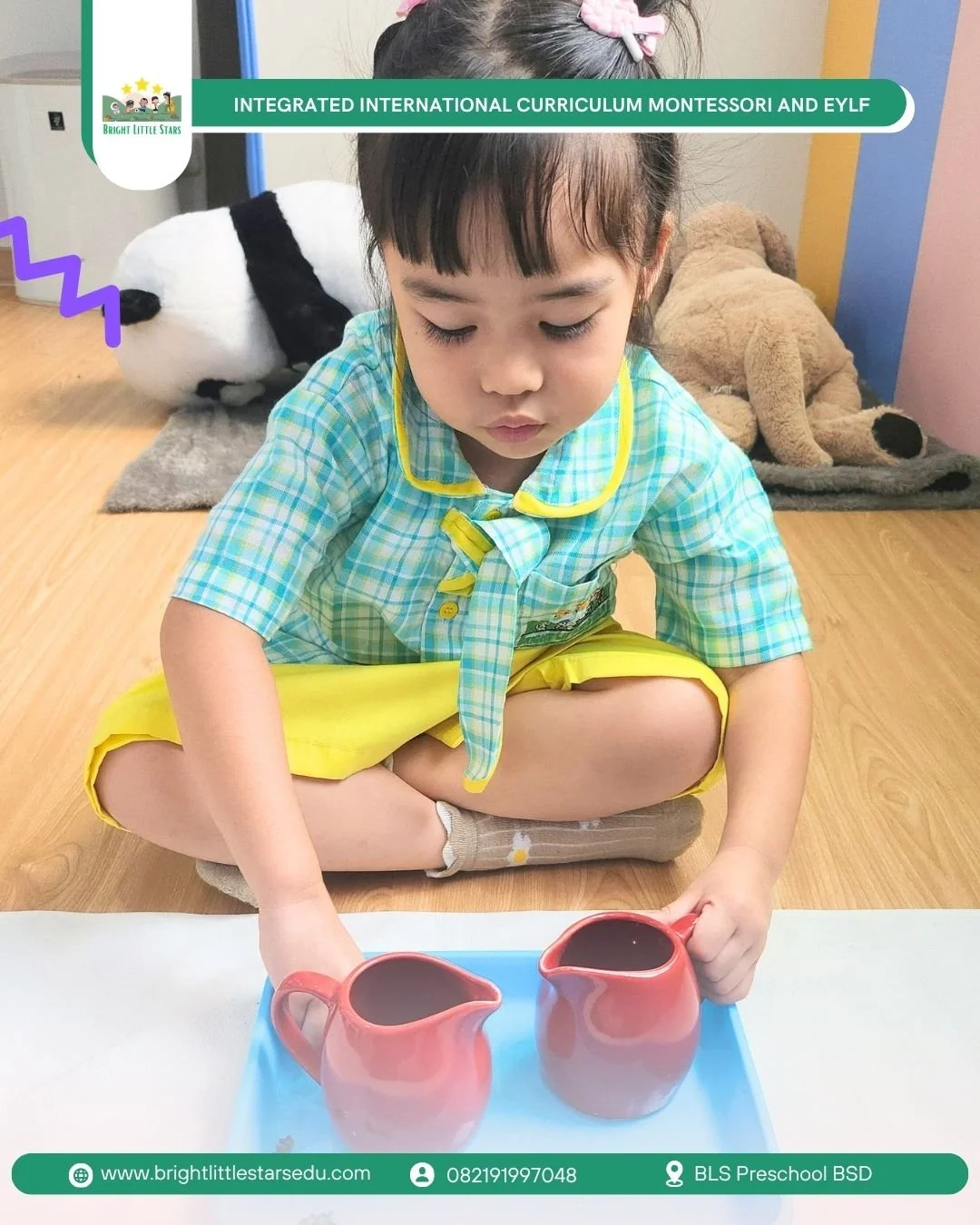
One of the greatest benefits of practical life activities is that they help children develop a sense of responsibility from an early age. Through simple tasks such as pouring water, children learn that they are capable of completing meaningful work on their own and caring for their environment.
In a pouring activity, the learning process extends beyond transferring water between containers. Children are also encouraged to prepare their workspace, handle materials carefully, and return items to their proper place when they are finished. These small routines help children understand the importance of organization, responsibility, and respect for shared learning spaces.
At Bright Little Stars Preschool, practical life activities are designed to help children become active and responsible participants in their daily routines. Rather than relying on adults for every task, children are encouraged to take initiative and complete age-appropriate activities independently. This approach helps build confidence while fostering a positive attitude toward learning and responsibility.
Practical life work also teaches children valuable problem-solving skills. If water spills during a pouring activity, children learn that mistakes are a normal part of learning. Instead of becoming discouraged, they are guided to clean up and try again. This helps develop resilience, perseverance, and a growth mindset.
These experiences prepare children for many aspects of everyday life. The skills they develop through practical life activities can support self-care routines, classroom responsibilities, and future learning tasks.
By participating in activities that encourage independence and accountability, children learn that their actions matter. Over time, these lessons help them become more confident, capable, and responsible individuals who are ready to take on new challenges with enthusiasm.