

Strong Hands First: Building the Foundation for Writing in Preschool
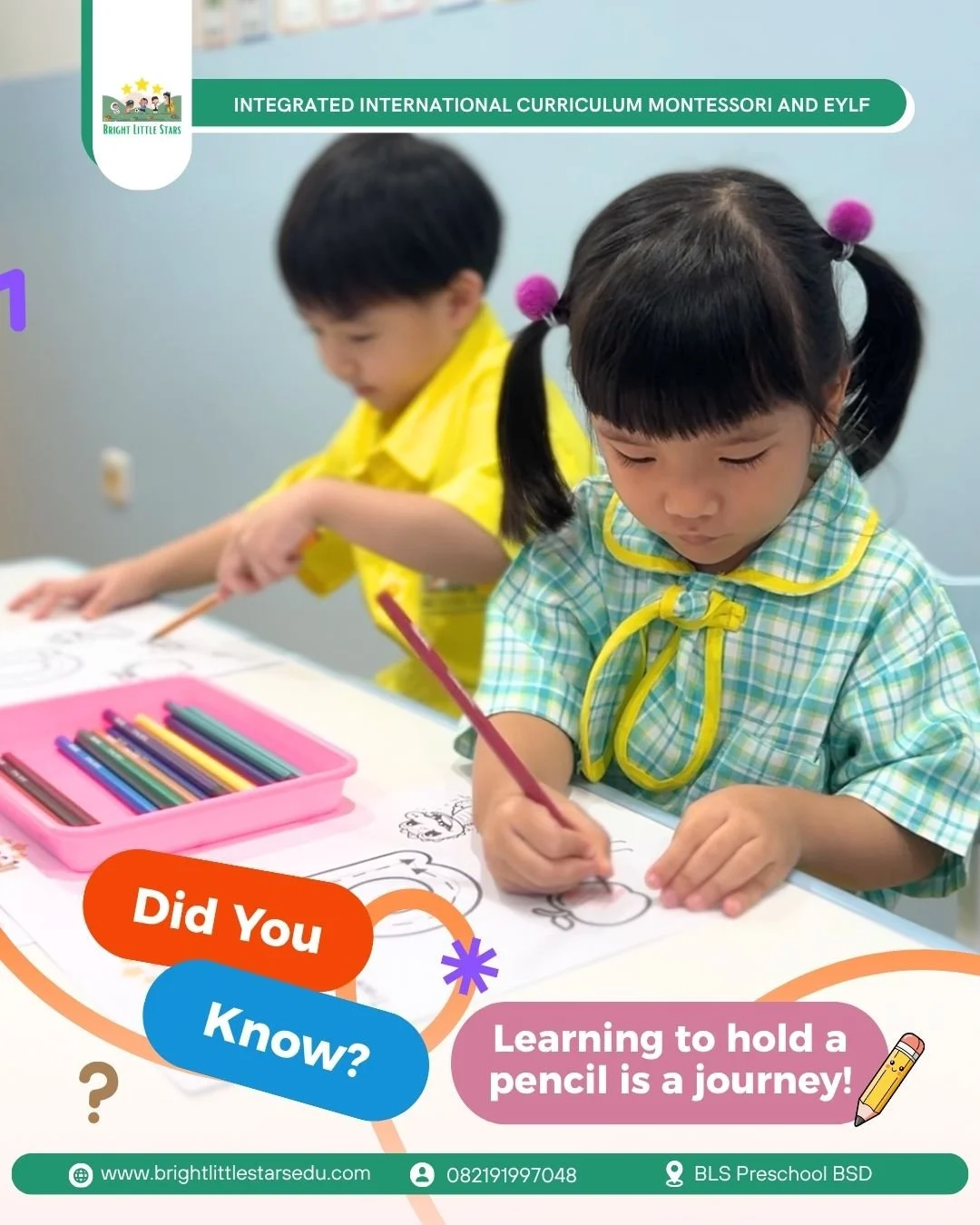
Learning to Hold a Pencil Is a Journey
Many parents feel excited when their child starts showing interest in drawing and writing. However, learning to hold a pencil properly does not happen overnight. It is a gradual developmental journey that takes time, practice, and patience.
Before children can develop a mature tripod grip, they first move through several natural stages of hand development. In the beginning, young children often use a whole-hand grasp, also known as a palmar grasp, where the pencil is held tightly with the entire hand. As their muscles become stronger and their coordination improves, they slowly gain more control over their finger movements.
These early stages are incredibly important because they help build the foundation for future writing skills. Through activities like drawing, coloring, tracing, squeezing, and manipulating objects, children strengthen the small muscles in their hands and fingers. They also improve hand-eye coordination, focus, and control.
At Bright Little Stars Preschool, we understand that every child develops at their own pace. That is why we encourage children to explore writing tools in a relaxed and supportive environment. Instead of rushing children to write neatly too early, we focus on helping them enjoy the process of learning.
By giving children the opportunity to practice through play and hands-on activities, we help them develop confidence and independence naturally. Strong writing skills begin with strong little hands, and every small step is part of an important learning journey.
Understanding the Early Stages of Pencil Grip Development
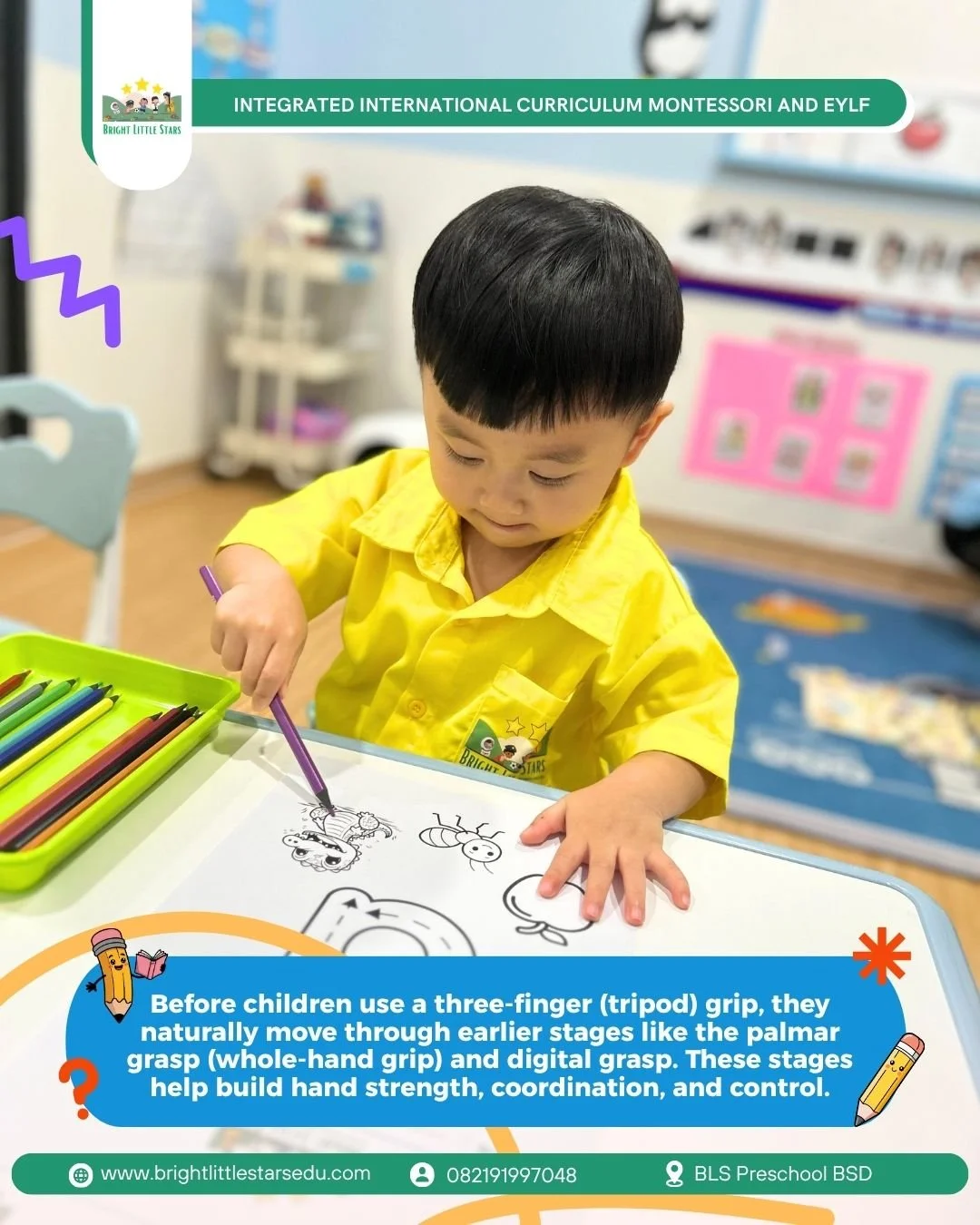
Before children are able to hold a pencil with a mature three-finger grip, they naturally pass through several important developmental stages. Each stage plays a valuable role in building the strength, coordination, and control needed for future writing skills.
In the early years, children commonly use a palmar grasp, where the pencil is held with the entire hand. This is completely normal and helps children become familiar with holding and controlling writing tools. As their fine motor skills continue to develop, children gradually begin using their fingers more independently, leading to better precision and movement.
These stages may look simple, but they are actually important milestones in early childhood development. Through repeated practice, children learn how to control pressure, improve hand stability, and coordinate small finger movements. Over time, these skills support more comfortable and efficient writing.
At Bright Little Stars, we provide children with meaningful opportunities to strengthen these foundational skills through fun and engaging activities. Coloring, tracing, threading, sensory play, and hands-on exploration all help support fine motor development in a natural way.
Every child develops differently, and progress may vary from one child to another. Some children may quickly transition to a tripod grip, while others may need more time and practice. What matters most is providing encouragement and a supportive learning environment where children feel confident to explore and grow.
By understanding the early stages of pencil grip development, parents can better appreciate that strong writing skills are built step by step through patience, practice, and play.
Building Fine Motor Skills Through Play and Movement
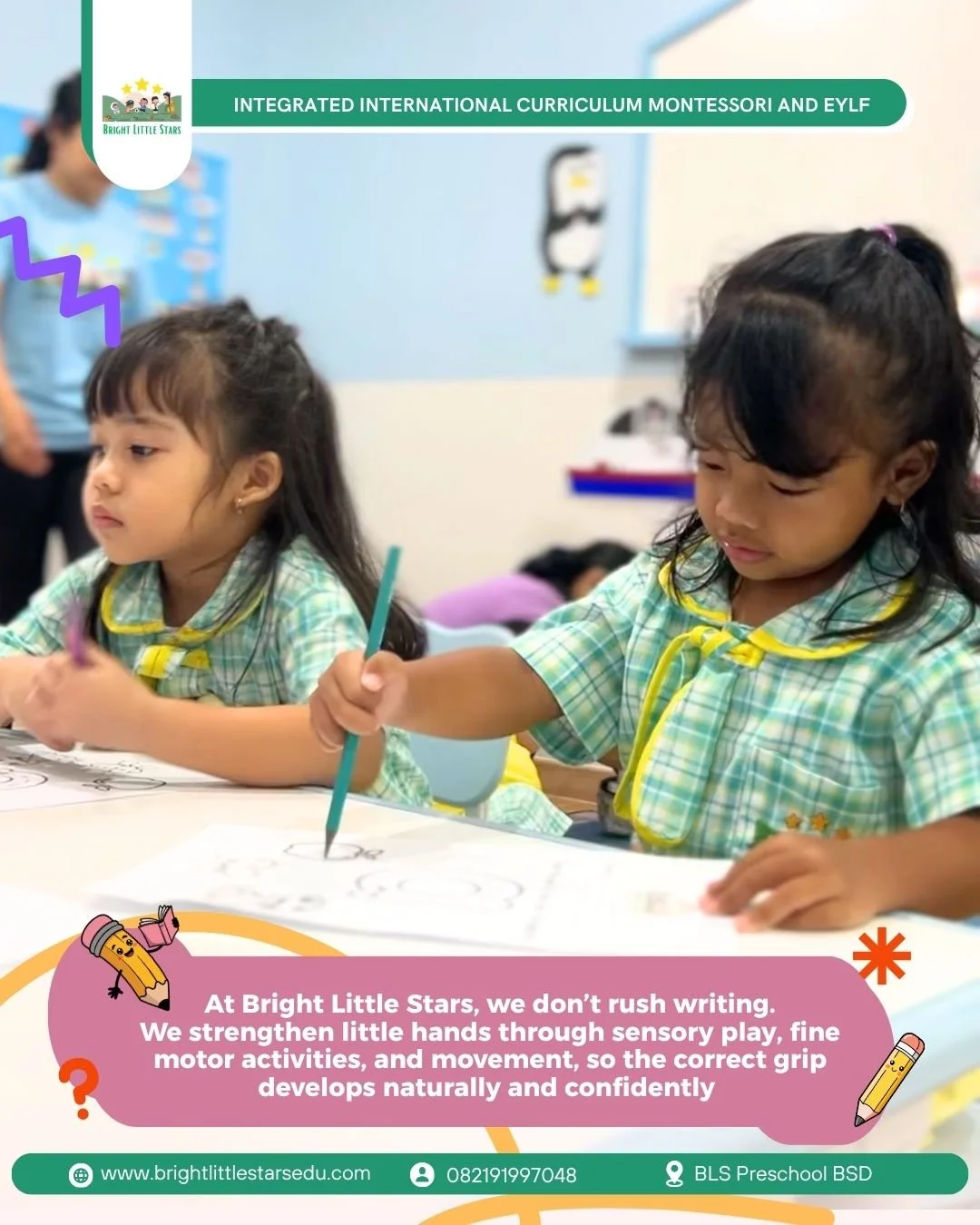
At Bright Little Stars, we believe that children develop writing skills best when learning feels enjoyable and natural. Before children can confidently write letters and numbers, they first need strong fine motor skills that support hand control and coordination.
Fine motor development involves strengthening the small muscles in the hands, fingers, and wrists. These muscles are essential for tasks such as holding a pencil, cutting with scissors, buttoning clothes, and drawing with control. Rather than focusing only on writing practice, young children benefit greatly from activities that encourage movement and exploration.
That is why we introduce a variety of hands-on experiences that help children build these important skills. Sensory play, threading activities, playdough, painting, tracing, and object manipulation all help improve finger strength and coordination in fun and engaging ways. These activities also encourage concentration, independence, and creativity.
Movement-based activities are equally important in supporting early writing development. Climbing, balancing, carrying objects, and other physical activities help children strengthen their overall body control and posture, which contributes to better stability when sitting and writing.
We understand that every child develops at their own pace, so we create a supportive environment where children feel comfortable practicing without pressure. By allowing children to learn through play, they become more confident and motivated to explore new skills.
When children develop strong fine motor foundations first, writing becomes a more comfortable and enjoyable experience. Small daily activities can make a big difference in helping little hands grow stronger and more prepared for future learning.
Strong Hands First, Writing Comes Next
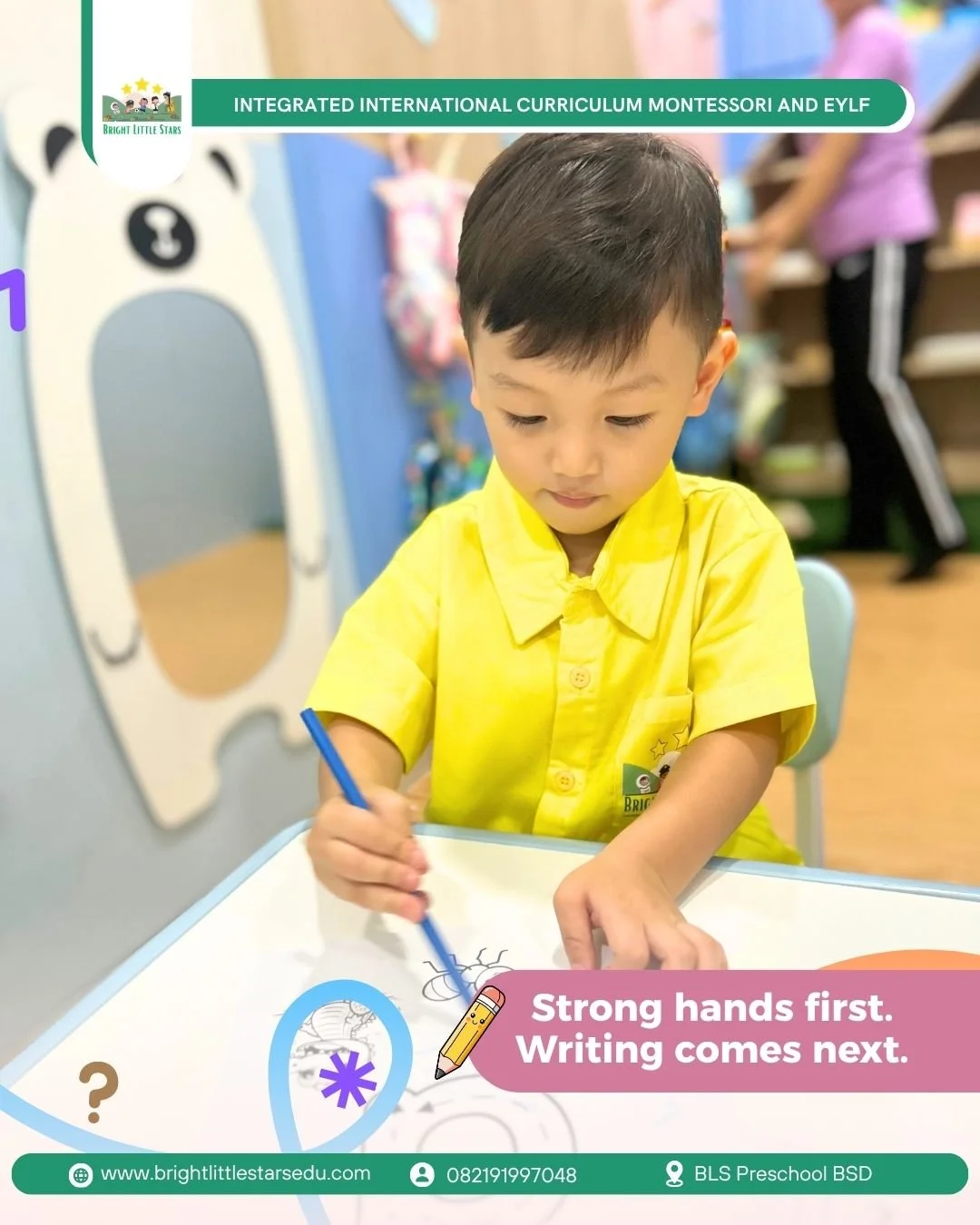
Learning to write is an exciting milestone for young children, but strong writing skills begin long before a child forms letters on paper. At Bright Little Stars, we believe that developing hand strength and coordination should come first, allowing writing skills to emerge more naturally and confidently over time.
Young children need well-developed muscles in their hands, fingers, shoulders, and wrists to comfortably control a pencil. Without these foundational skills, writing can feel tiring and frustrating. That is why early childhood education should focus not only on academic readiness, but also on physical and fine motor development.
Through carefully planned activities, children gradually build the strength and control needed for future writing tasks. Simple experiences such as coloring, tracing, using tongs, threading beads, sensory play, and manipulating small objects all help strengthen little hands in meaningful ways. These activities also improve concentration, coordination, and independence.
We also encourage children to participate in movement-based learning throughout the day. Activities that involve climbing, balancing, carrying, and active play help develop posture and body stability, both of which are important for maintaining proper writing positions.
At Bright Little Stars, we do not rush children to achieve perfect handwriting too early. Instead, we focus on creating a positive and supportive learning environment where children can develop skills at their own pace. When children feel confident and physically prepared, writing becomes a more enjoyable and rewarding experience.
Strong hands create the foundation for confident writers, and every stage of development plays an important role in that journey.