

How Family Tree Activities Help Preschoolers
Discovering Family Connections Through Collaborative Learning
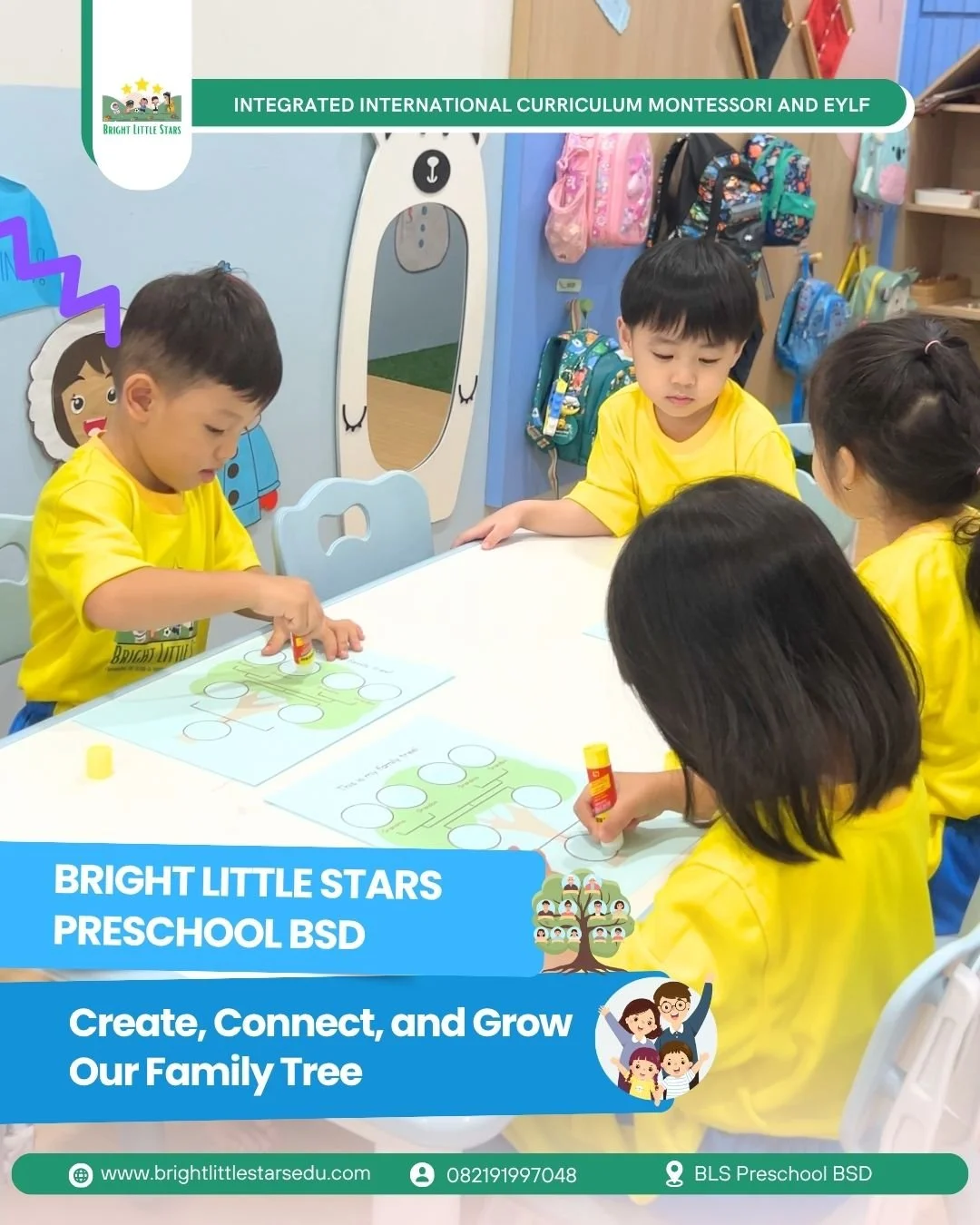
At Bright Little Stars Preschool, children are encouraged to explore meaningful concepts through engaging, hands-on activities. In this Family Tree activity, the children work together while learning about the people who make up their families. Although the task may appear simple, it introduces important lessons about identity, relationships, and belonging.
As the children gather around the table, they observe their Family Tree templates and begin discussing the family members they know. These conversations help children recognize that every family is unique while also understanding that all families are connected through relationships built on love and care.
Activities like this support early cognitive development by encouraging children to categorize and organize information. As they identify parents, siblings, grandparents, and other relatives, they begin developing foundational thinking skills that help them understand connections and patterns in everyday life.
The group setting also provides valuable opportunities for social learning. Children learn to wait for their turn, listen to others, and participate in shared discussions. These experiences help strengthen communication skills while fostering respect for different perspectives and family structures.
At the same time, children gain confidence when talking about the people who are important to them. Sharing family experiences allows them to express themselves while building a stronger sense of self-awareness.
The Montessori and EYLF-inspired learning approach at Bright Little Stars Preschool emphasizes meaningful learning experiences that connect classroom activities with children's real lives. By exploring their own families, children are able to make personal connections to what they are learning, making the experience both memorable and meaningful.
Through collaborative Family Tree activities, children begin building a deeper understanding of relationships, community, and the important role families play in their lives.
Developing Focus and Fine Motor Skills Through Family Tree Activities
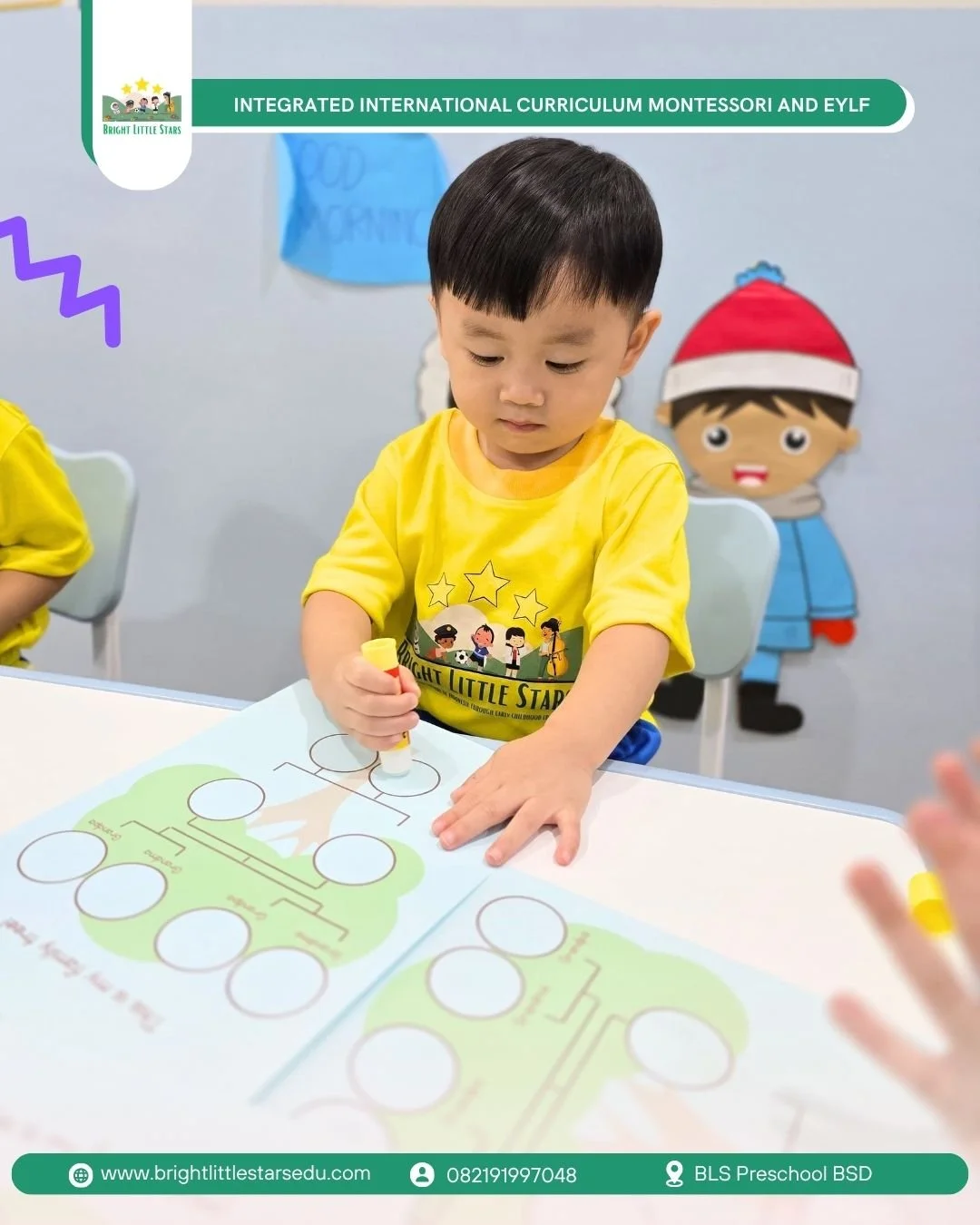
At Bright Little Stars Preschool, learning activities are carefully designed to support multiple areas of development at the same time. In this stage of the Family Tree project, children focus on placing glue onto specific sections of their templates, an activity that helps strengthen both concentration and fine motor skills.
Applying glue may seem like a simple task, but it requires children to use precise hand movements and control. They must hold the glue stick correctly, apply the right amount of pressure, and target specific spaces on the paper. These actions help strengthen the small muscles in the hands and fingers that are essential for future writing, drawing, and self-care tasks.
The activity also encourages children to slow down and pay attention to details. Rather than rushing through the task, they learn to focus on one step at a time. This ability to concentrate is an important skill that supports learning across all areas of the curriculum.
As children work independently, they develop a sense of responsibility for their own learning. They begin to understand that careful effort often leads to better results. Completing each step successfully gives them a feeling of accomplishment and encourages a positive attitude toward new challenges.
The Family Tree activity also provides meaningful context for learning. While applying glue, children continue thinking about the family members they will place onto their templates. This connection between hands-on work and personal experiences makes learning more engaging and memorable.
At Bright Little Stars Preschool, practical activities are used to build both academic readiness and life skills. By combining fine motor practice with meaningful themes, children strengthen important developmental abilities while exploring concepts that are relevant to their everyday lives.
Through focused tasks like this, children learn that patience, attention, and persistence are valuable skills that help them succeed both inside and outside the classroom.
Building a Sense of Identity by Exploring Family Members
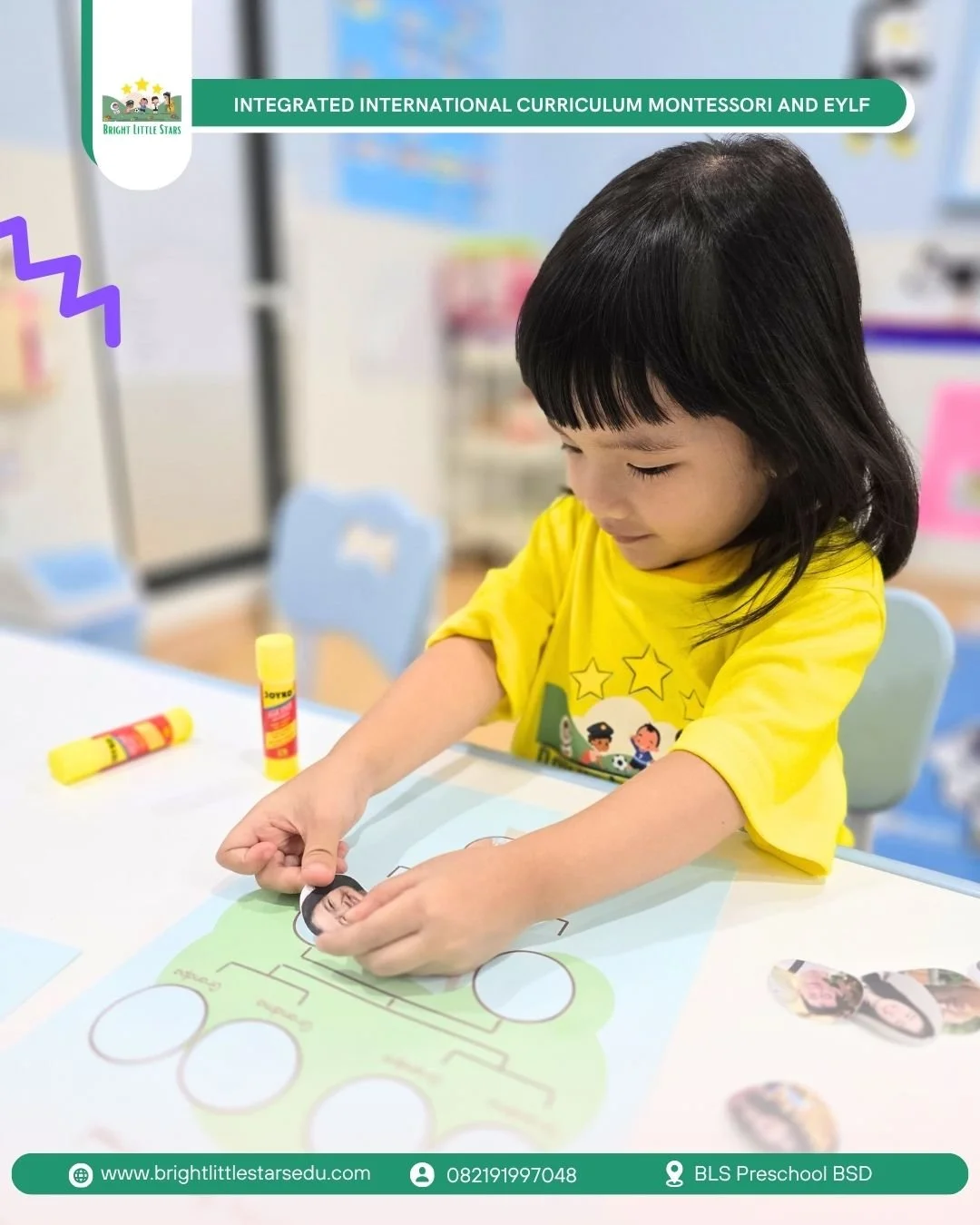
At Bright Little Stars Preschool, children are encouraged to learn about themselves and the world around them through meaningful, hands-on experiences. In this part of the Family Tree activity, children begin placing family photos onto their templates, transforming a simple worksheet into a personal representation of the people who are important in their lives.
As children carefully position each family member in the correct place, they start making connections between names, faces, and relationships. They learn who belongs to different generations within their family and begin understanding how family members are connected to one another. These early experiences help children develop a stronger sense of identity and belonging.
The process of handling and placing the photos also supports fine motor development. Children use their fingers to pick up, align, and attach the pictures accurately, strengthening the hand control needed for future classroom tasks such as writing, cutting, and drawing.
Beyond physical skills, the activity encourages meaningful reflection. Children often talk about their family members while completing their Family Tree, sharing stories and experiences with teachers and classmates. These conversations help expand vocabulary, improve communication skills, and build confidence in expressing personal thoughts.
Family-based activities also promote emotional development. When children see the people they love represented in their work, they gain a greater appreciation for the relationships that provide support, care, and encouragement in their daily lives. This understanding contributes to emotional security and positive self-esteem.
At Bright Little Stars Preschool, learning becomes more meaningful when children can connect lessons to their own experiences. The Family Tree activity helps bridge home and school, allowing children to celebrate their unique backgrounds while learning important developmental skills.
Through activities like this, children develop a deeper understanding of who they are, where they belong, and the special people who help shape their lives.
Celebrating Family Diversity and a Sense of Belonging
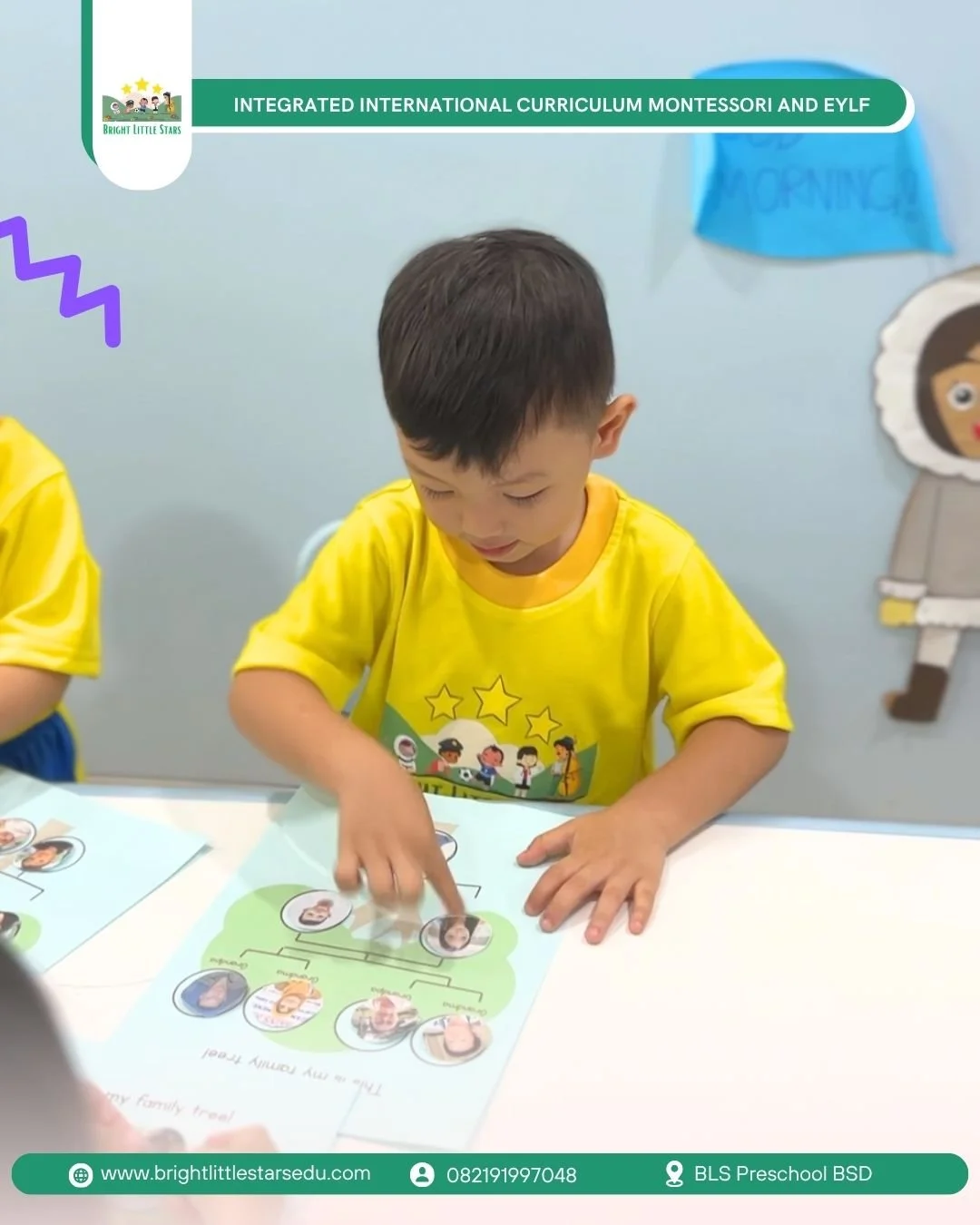
At Bright Little Stars Preschool, one of the most valuable lessons children can learn is that every family is unique and special. As the Family Tree projects come together, children have the opportunity to see and celebrate the different family structures represented within their classroom community.
While some children may have large families and others smaller ones, each Family Tree tells an important story. Through sharing and discussing their projects, children begin to understand that families can look different while still providing love, support, and care. This helps foster respect, empathy, and appreciation for diversity from an early age.
Presenting completed Family Trees also gives children an opportunity to practice communication skills. They may talk about their parents, siblings, grandparents, or other important family members, helping them build confidence when speaking in front of others. These conversations encourage active listening as classmates learn about one another's experiences and backgrounds.
The completed Family Tree serves as more than just an art project. It becomes a visual representation of a child's identity and the relationships that shape their daily life. Seeing their family displayed on the tree helps children feel valued and connected, reinforcing a strong sense of belonging.
Activities that connect home and school are especially meaningful because they help children recognize that learning extends beyond the classroom. By involving family members in the learning process, children gain a deeper appreciation for the people who support and guide them every day.
At Bright Little Stars Preschool, we believe that fostering positive relationships is an important part of early childhood education. Through Family Tree activities, children not only learn about family connections but also develop a greater understanding of themselves, their classmates, and the diverse world around them.
These experiences help create confident, compassionate learners who appreciate the importance of family, community, and belonging.