

Writing on the Sand: Learning Language Through Sensory Play
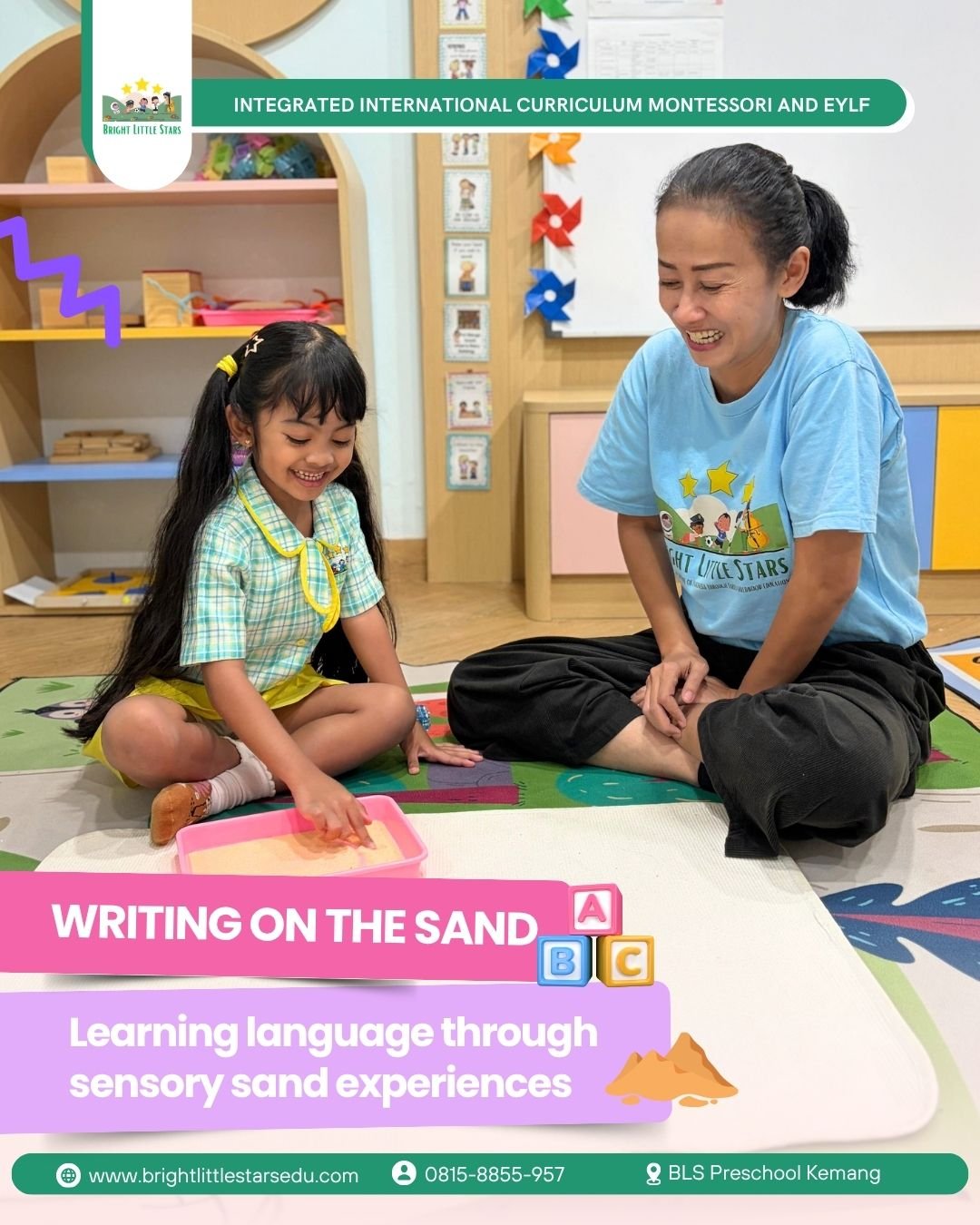
Discovering Letters Through Touch and Exploration
At Bright Little Stars Preschool Kemang, learning language becomes even more meaningful when children can engage their senses. In this activity, a child explores early writing skills by tracing shapes and letters in a tray of sand. The soft texture of the sand creates a fun and inviting environment where learning feels like play rather than a formal lesson.
As children move their fingers through the sand, they develop familiarity with the movements needed for writing. This hands-on approach helps strengthen fine motor control while introducing the shapes and patterns that form letters. Because mistakes can be easily erased, children feel comfortable experimenting and trying again, which builds confidence in the learning process.
The teacher’s presence also plays an important role. Through encouragement, conversation, and gentle guidance, the child is supported as she explores new concepts. These interactions help connect physical actions with language development, making learning more engaging and effective.
Beyond literacy skills, sand writing encourages concentration, patience, and creativity. Children focus on each movement while enjoying the sensory experience of touching and drawing in the sand. At Bright Little Stars Preschool Kemang, activities like this show how simple materials can create meaningful learning opportunities, helping preschoolers build a strong foundation for future reading and writing success through hands-on discovery and joyful learning.
Strengthening Fine Motor Skills Through Sensory Writing
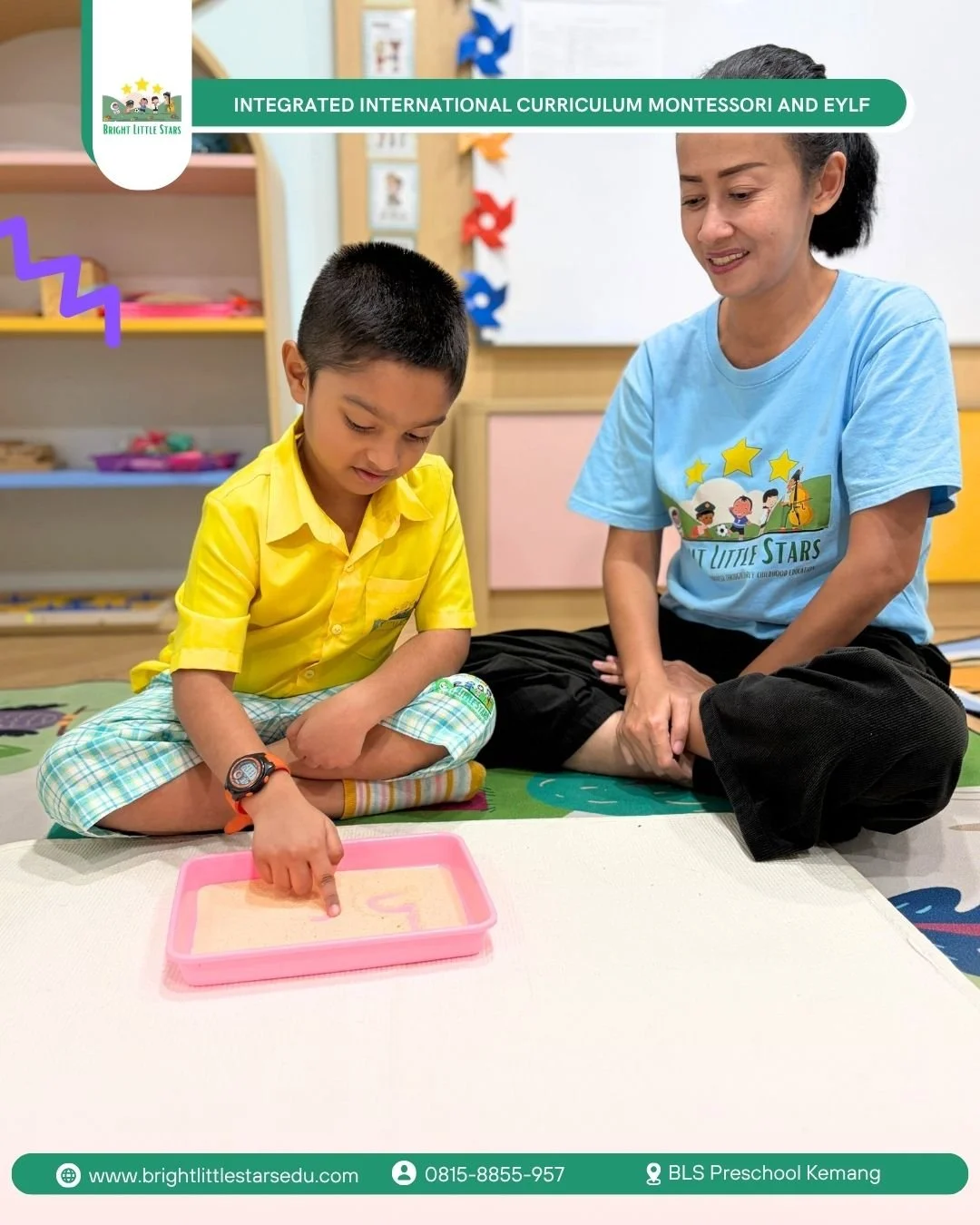
In this activity, the child focuses carefully on tracing patterns in a tray of sand while receiving support from the teacher. Sensory writing activities like this are an excellent way to strengthen fine motor skills, which are essential for future handwriting development. Every movement of the finger helps children practice control, precision, and coordination in a relaxed and enjoyable setting.
Unlike traditional writing activities, sand writing allows children to learn without worrying about making mistakes. If a line is drawn incorrectly, it can simply be erased with a swipe of the hand. This freedom encourages children to explore, experiment, and build confidence as they learn new letter shapes and writing movements.
The sensory element also helps children stay engaged. Feeling the texture of the sand while creating marks adds an extra layer of learning that supports memory and understanding. Many children find tactile experiences both calming and motivating, making it easier for them to remain focused on the task.
With the teacher providing gentle guidance and encouragement, the child can develop important language and pre-writing skills at their own pace. Activities like sensory sand writing demonstrate how learning can be both effective and enjoyable. Through hands-on exploration, preschoolers strengthen their finger muscles, improve concentration, and gain confidence as they take their first steps toward becoming successful writers.
Building Letter Recognition Through Repetition and Practice
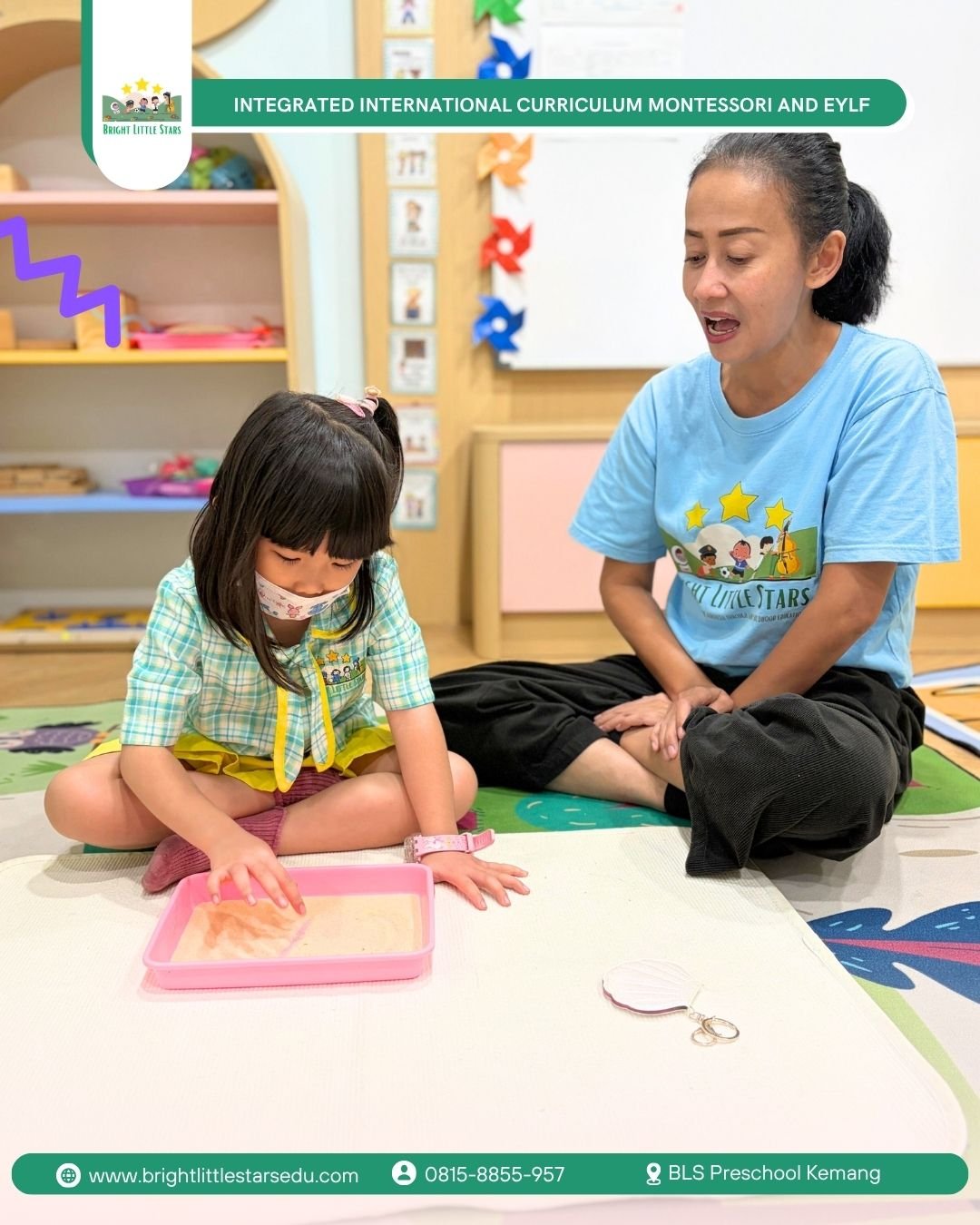
At Bright Little Stars Preschool Kemang, children are encouraged to learn at their own pace through activities that combine exploration with repetition. In this sensory sand writing activity, children strengthen their letter recognition skills by tracing shapes and letter forms multiple times, helping them become more familiar with the building blocks of written language.
Repeated practice is an important part of early literacy development. Each time a child traces a letter in the sand, they reinforce the connection between the letter’s shape and its meaning. Over time, these repeated movements help children remember letter formations more easily and build confidence in their emerging writing abilities.
The sand tray provides a unique learning experience because it engages both visual and tactile senses. Children can see the letters they create while also feeling the movement of their fingers through the sand. This multi-sensory approach helps make learning more memorable and enjoyable.
The activity also promotes focus and attention to detail. As children carefully follow letter shapes, they learn to slow down and observe the direction and sequence of each movement. These skills are valuable preparation for future handwriting tasks and classroom learning.
Teachers provide encouragement and guidance throughout the process, helping children celebrate their progress rather than focusing solely on perfect results. This supportive environment allows children to develop a positive attitude toward learning and feel confident when trying new challenges.
Developing Confidence and a Love for Early Writing
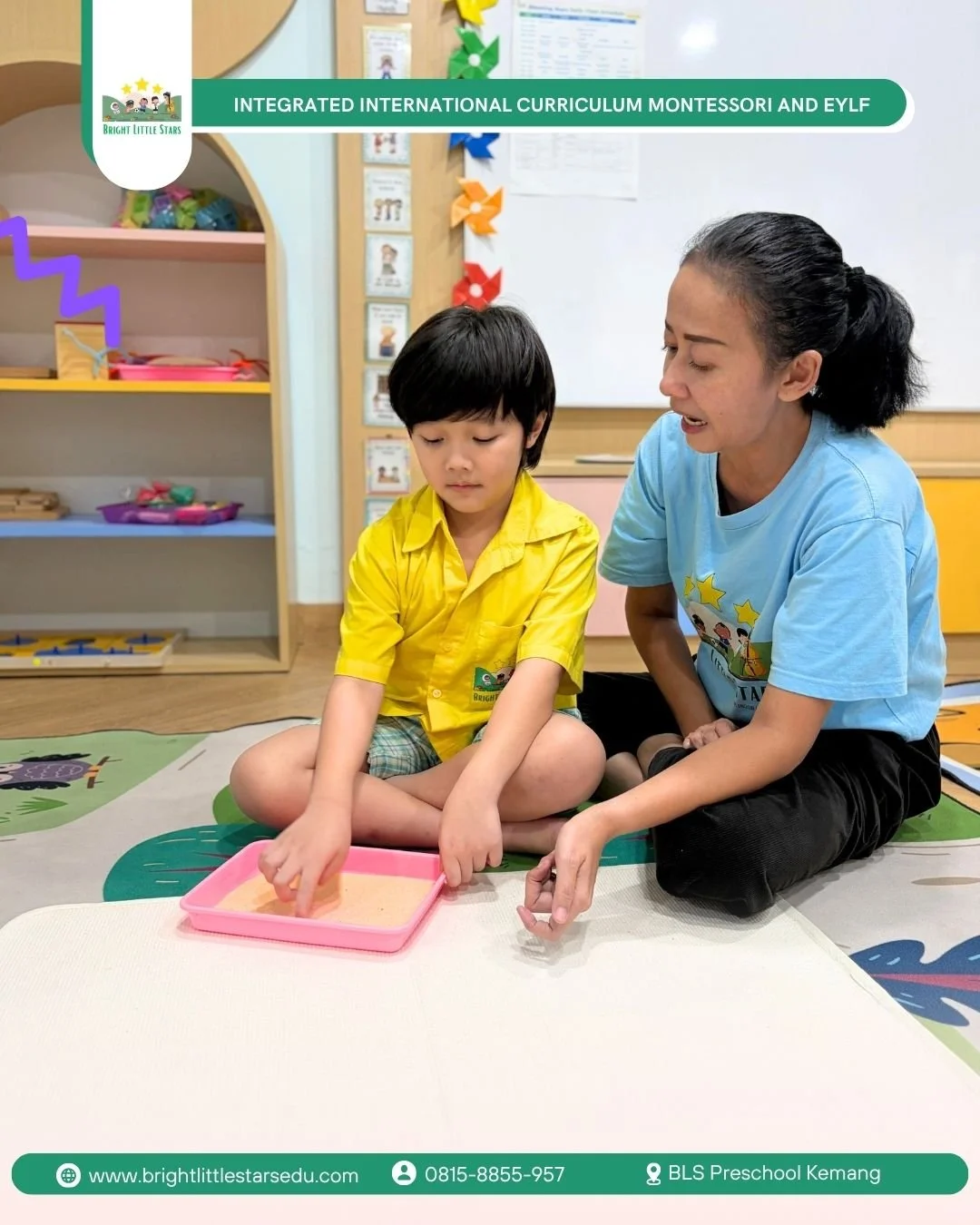
At Bright Little Stars Preschool Kemang, the goal of early literacy activities is not only to teach children how to write but also to help them develop confidence and enjoyment in the learning process. Sensory sand writing provides a positive introduction to writing by allowing children to explore letters in a relaxed and engaging environment.
Unlike traditional pencil-and-paper tasks, sand writing feels playful and inviting. Children can experiment freely, erase mistakes easily, and try again without feeling pressured. This freedom encourages a growth mindset, helping children understand that learning is a process that improves with practice and persistence.
As children become more comfortable tracing letters and patterns, they gain confidence in their abilities. Small successes, such as correctly forming a letter or completing a tracing activity, create a sense of achievement that motivates them to continue learning. These positive experiences help build a strong foundation for future literacy development.
The activity also encourages independence. Children learn to explore, observe, and make adjustments on their own while receiving gentle support from teachers when needed. This balance of guidance and self-discovery helps foster self-confidence and a willingness to take on new challenges.
Beyond writing skills, sensory activities contribute to a positive attitude toward learning. When children associate literacy with curiosity, creativity, and enjoyment, they are more likely to remain engaged and enthusiastic as they progress through their educational journey.
At our preschool, hands-on experiences like sand writing transform early literacy into an exciting adventure. Through sensory exploration, repetition, and encouragement, children develop the confidence, skills, and love of learning that will support them as they take their next steps toward reading and writing success.