

Hunting for Shapes Around the Classroom: Making Math Fun for Preschoolers
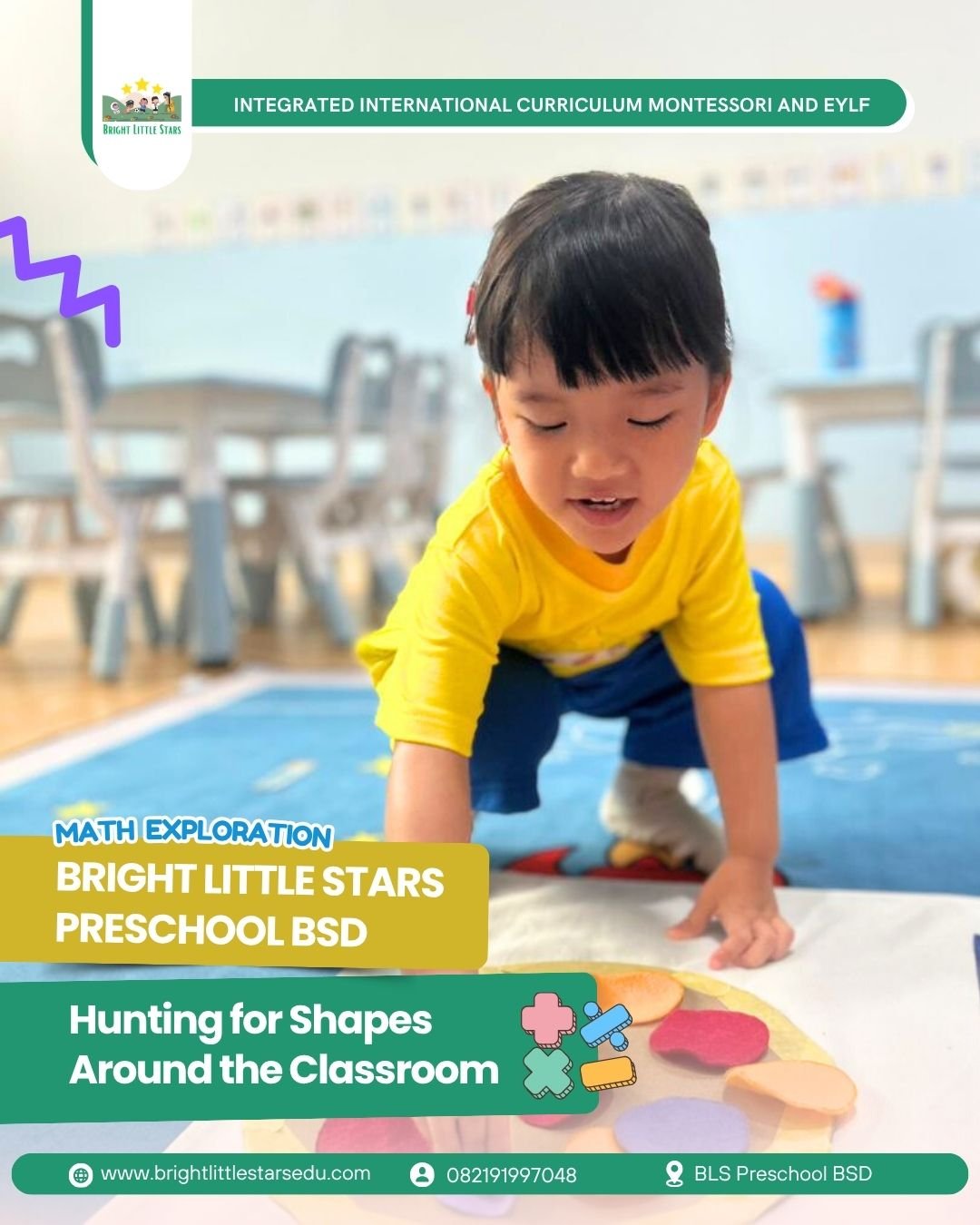
Recognising Shapes Through Interactive Classroom Exploration
One of the best ways for young children to develop early math skills is by learning through movement and play. In this activity at Bright Little Stars Preschool, students go on a fun shape hunt around the classroom, identifying and sorting different shapes while actively engaging with their surroundings.
Instead of simply memorising names, children experience shapes with their hands and eyes. They pick up circles, ovals, and other colourful pieces, compare their sizes, and decide where each belongs. This hands-on approach makes abstract concepts much easier to understand.
As children search for matching shapes, they also practise observation and problem-solving. They learn to notice similarities and differences, make simple decisions, and test their ideas independently. These experiences help strengthen logical thinking while keeping learning enjoyable.
The activity also encourages concentration and patience. Children stay focused as they examine each piece and carefully place it in the correct location. Repeating these actions reinforces recognition skills and builds confidence with every successful match.
Teachers provide gentle guidance by asking open-ended questions such as, “Can you find another shape like this?” or “What makes these two different?” These conversations expand vocabulary while encouraging children to think critically about what they see.
At Bright Little Stars Preschool, math is introduced through meaningful experiences that feel like play rather than formal lessons. Interactive activities like shape hunts create positive associations with learning and inspire natural curiosity.
By exploring shapes in an active environment, preschoolers build a strong foundation for geometry, pattern recognition, and future mathematical concepts. More importantly, they discover that learning can be exciting, engaging, and filled with opportunities to explore the world around them.
Matching Shapes to Strengthen Problem-Solving Skills
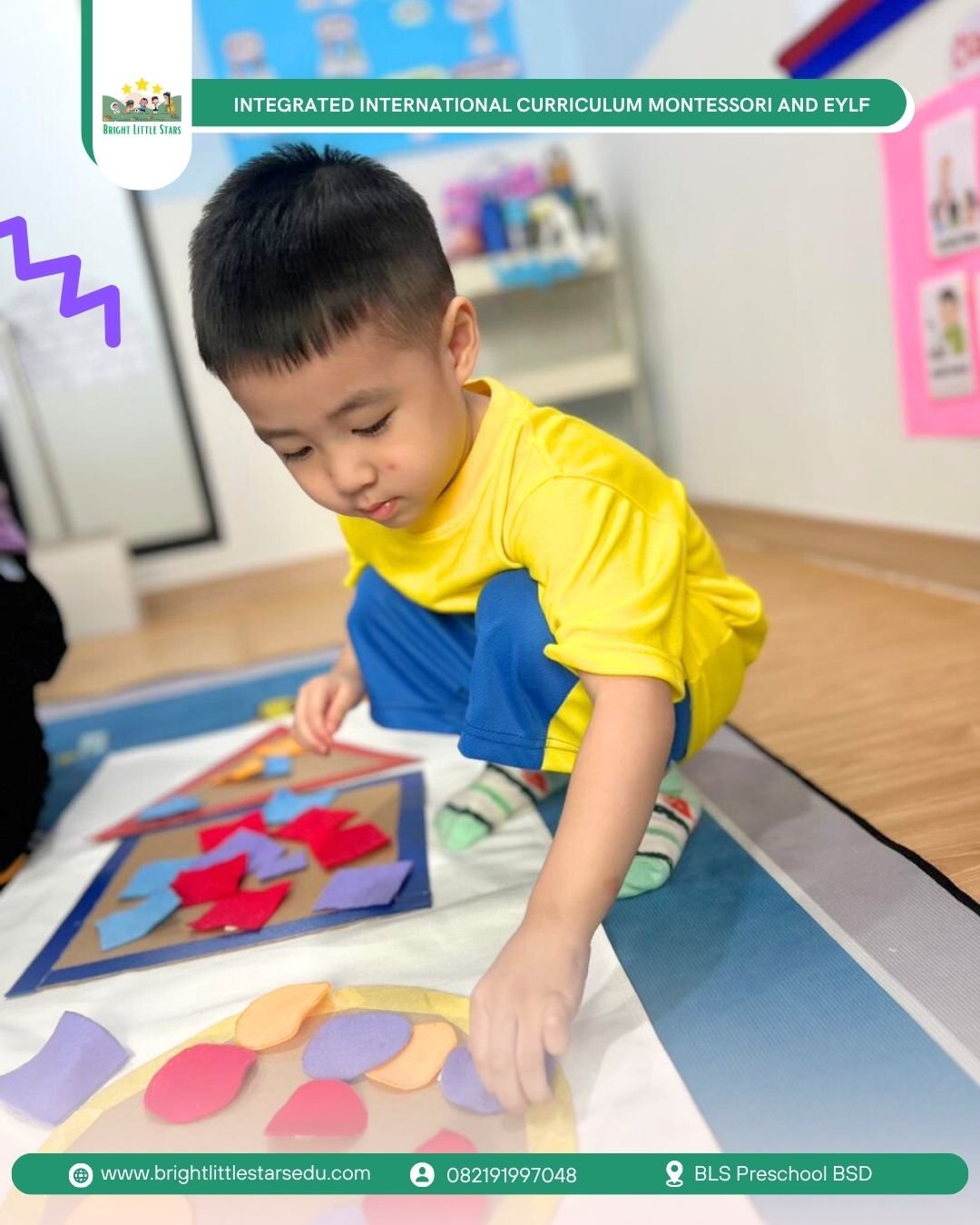
Learning shapes becomes even more meaningful when children are encouraged to sort, compare, and organise them independently. During this activity at Bright Little Stars Preschool, students carefully examine colourful shape pieces and match them to the correct outlines, turning a simple game into an engaging math lesson.
As children pick up each shape, they begin to notice important characteristics such as curved edges, straight lines, and different sizes. Rather than relying on memorisation, they actively explore how each piece fits into a larger pattern. This process develops both visual discrimination and logical thinking.
Shape matching also supports early problem-solving skills. If a piece does not fit where they expected, children are encouraged to try again and think about why it belongs somewhere else. These small moments of trial and error teach resilience while building confidence in their own decision-making abilities.
The activity naturally strengthens fine motor skills as well. Picking up, rotating, and placing the shapes requires coordination and hand control, helping children improve the precision needed for future writing and classroom tasks.
Working independently gives students a sense of accomplishment, while observing classmates introduces opportunities to learn different strategies. Teachers guide the experience with encouraging questions and positive reinforcement rather than simply providing answers, allowing children to discover solutions on their own.
At Bright Little Stars Preschool, activities are designed to combine academic learning with exploration and creativity. Shape matching is more than recognising geometric figures—it encourages children to think carefully, make observations, and solve challenges in a supportive environment.
By participating in hands-on math experiences like these, preschoolers develop essential cognitive skills while building a positive relationship with learning. Every correctly matched shape becomes another step toward greater confidence and readiness for more advanced mathematical concepts.
Collaborative Shape Games That Build Social and Math Skills
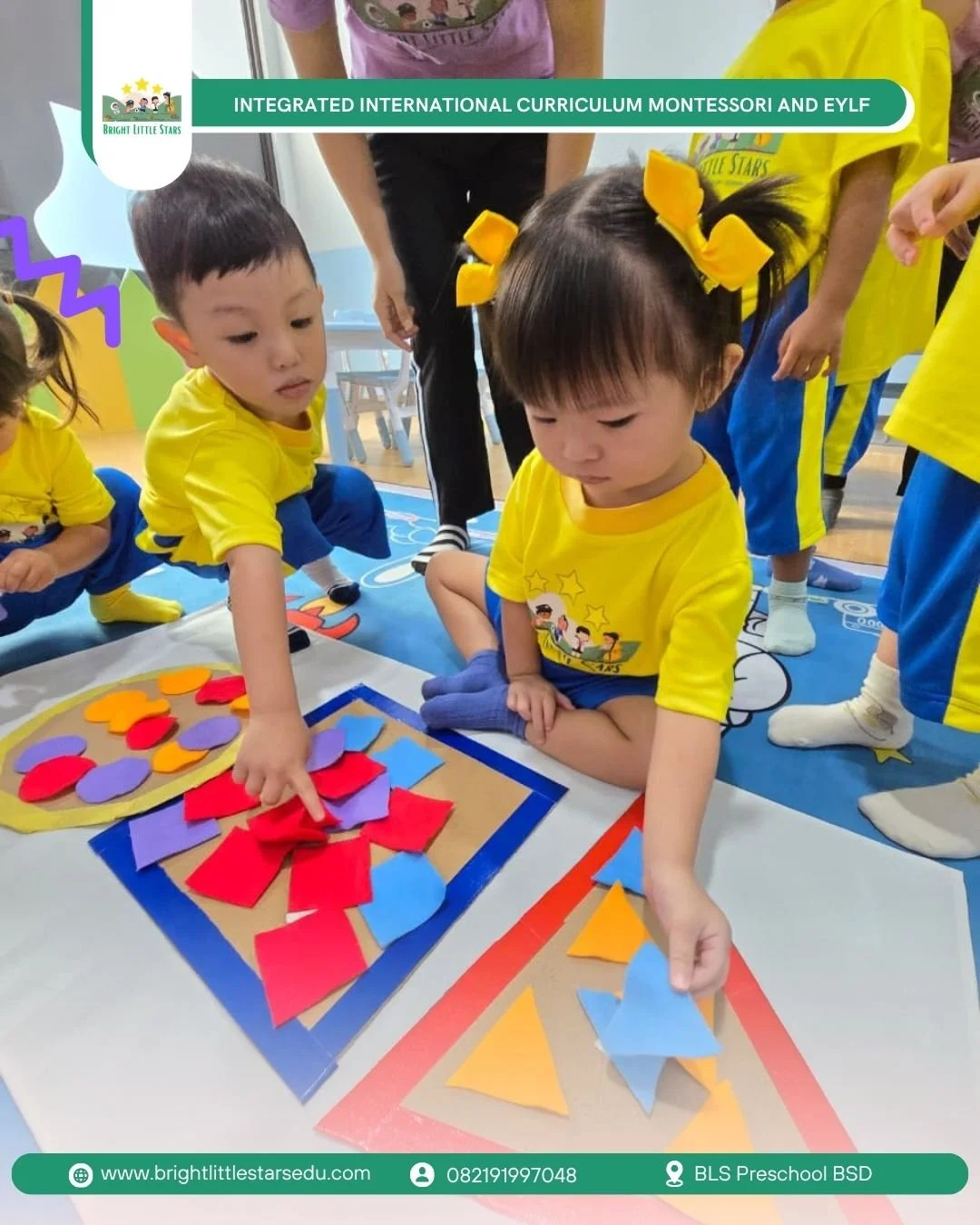
Learning math is even more enjoyable when children work together. During this group activity at Bright Little Stars Preschool, students collaborate to sort colourful shapes onto matching boards, creating an environment where teamwork and mathematical thinking develop side by side.
As children gather around the activity, they take turns selecting shapes and discussing where each piece belongs. These simple interactions encourage communication, listening, and cooperation while reinforcing important geometry concepts. Every child has the opportunity to participate and contribute to the shared task.
Working in a group also introduces valuable problem-solving experiences. When two children choose the same shape or disagree about its placement, they learn to explain their thinking, observe more carefully, and find solutions together. These moments strengthen both reasoning skills and social confidence.
The activity naturally promotes shape recognition by allowing children to compare triangles, squares, rectangles, and other forms in a hands-on way. Instead of learning from worksheets alone, they physically manipulate the pieces, making the concepts easier to understand and remember.
Teachers support the experience by encouraging discussion rather than providing immediate answers. Questions like “Why do you think this belongs here?” or “Can anyone find another matching shape?” inspire children to think critically while respecting different ideas from their classmates.
At Bright Little Stars Preschool, collaborative learning helps children see that education is not just about getting the correct answer but also about sharing ideas and learning from one another. Through engaging group activities, students develop patience, empathy, and confidence alongside academic skills.
By combining teamwork with interactive math exploration, children build a strong foundation for future classroom success. They discover that solving problems together can be rewarding, enjoyable, and an important part of everyday learning.
Applying Shape Knowledge Through Independent Discovery
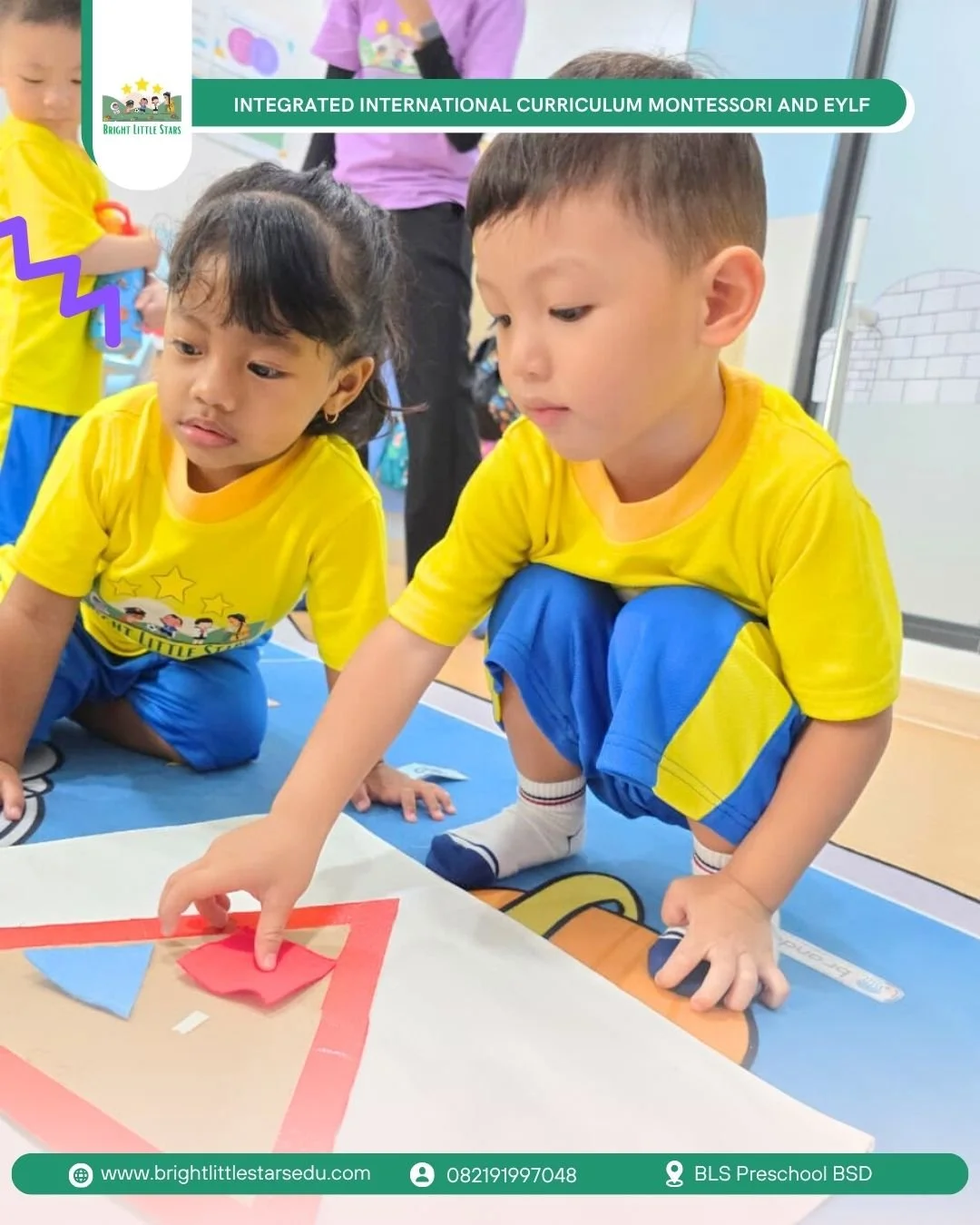
After recognising and matching shapes, children gain the most confidence when they can apply what they have learned on their own. At Bright Little Stars Preschool, independent shape activities encourage preschoolers to make decisions, solve problems, and explore mathematical concepts at their own pace.
In this activity, children carefully select colourful shapes and place them onto the correct boards without relying entirely on teacher direction. They observe the outlines, compare the pieces, and decide which one fits best. This process strengthens visual recognition while promoting independent thinking.
Making choices independently also develops confidence. Every successful match gives children a sense of achievement and motivates them to keep exploring. Even when mistakes happen, they learn that trying again and adjusting their approach is a natural part of learning.
The hands-on nature of the activity supports fine motor development as well. Picking up, rotating, and positioning each shape requires careful hand movements and coordination, helping children improve the control needed for everyday classroom tasks such as drawing, writing, and using scissors.
Beyond math, the experience nurtures patience and concentration. Children stay engaged as they focus on completing the puzzle, learning to work through challenges without giving up. These habits contribute to positive learning behaviours that extend far beyond shape recognition.
Teachers at Bright Little Stars Preschool create a supportive environment where curiosity is encouraged and every child is given the opportunity to discover solutions independently. Gentle guidance and positive reinforcement help students build resilience while enjoying the learning process.
By applying their knowledge through exploration, preschoolers develop a deeper understanding of shapes and spatial relationships. More importantly, they begin to see themselves as capable learners who can observe, think critically, and solve problems with confidence—skills that provide a strong foundation for future mathematical success.