

Exploring Insects Through Hands-On STEM Learning at BLS Preschool Kemang
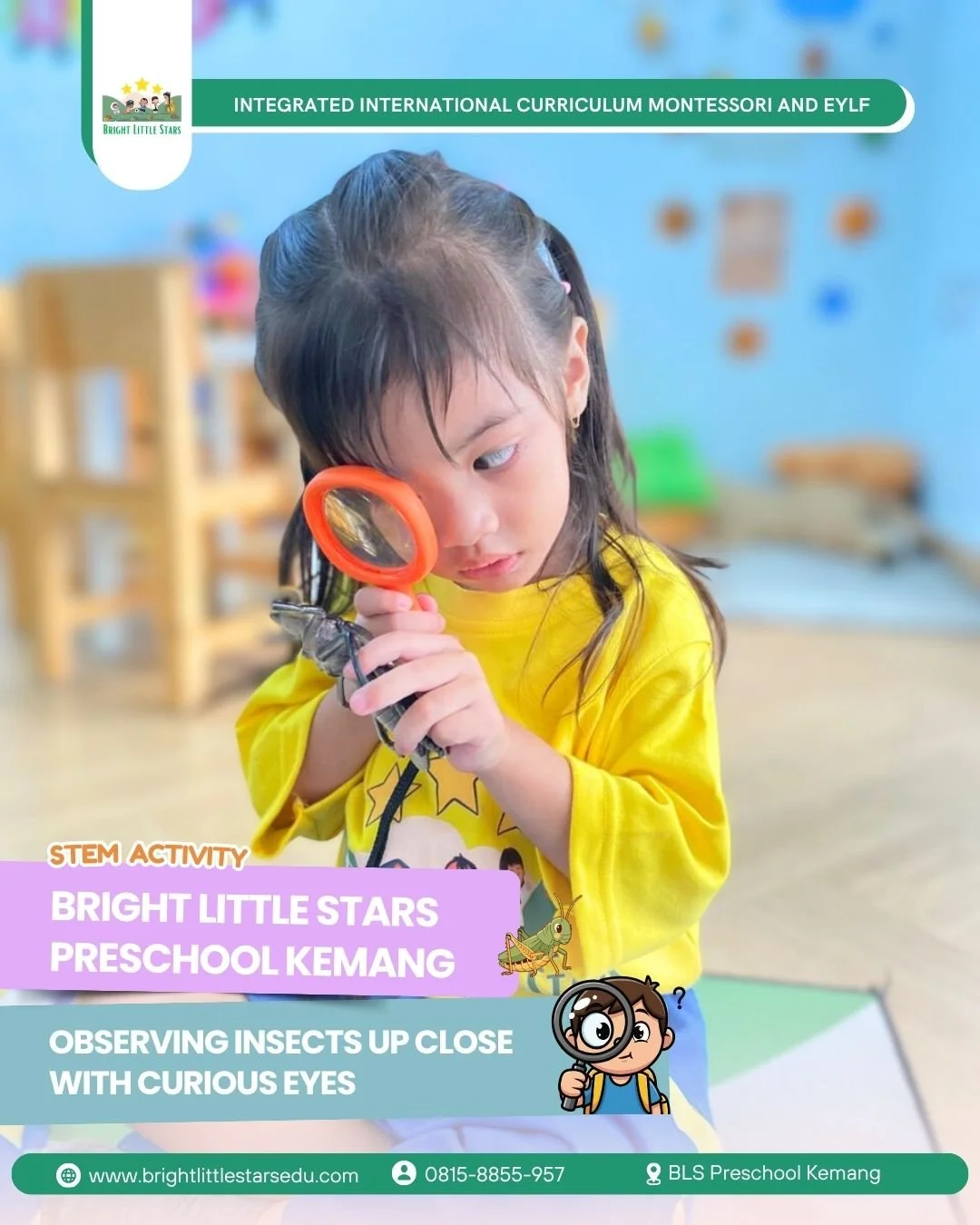
At Bright Little Stars Preschool Kemang, children are encouraged to explore the world through hands-on STEM activities that turn everyday discoveries into meaningful learning experiences. By observing insects up close with magnifying glasses, children can develop curiosity, strengthen their observation skills, and begin discovering how science works through exploration and questions.
Observing Insects Up Close Through Hands-On Exploration
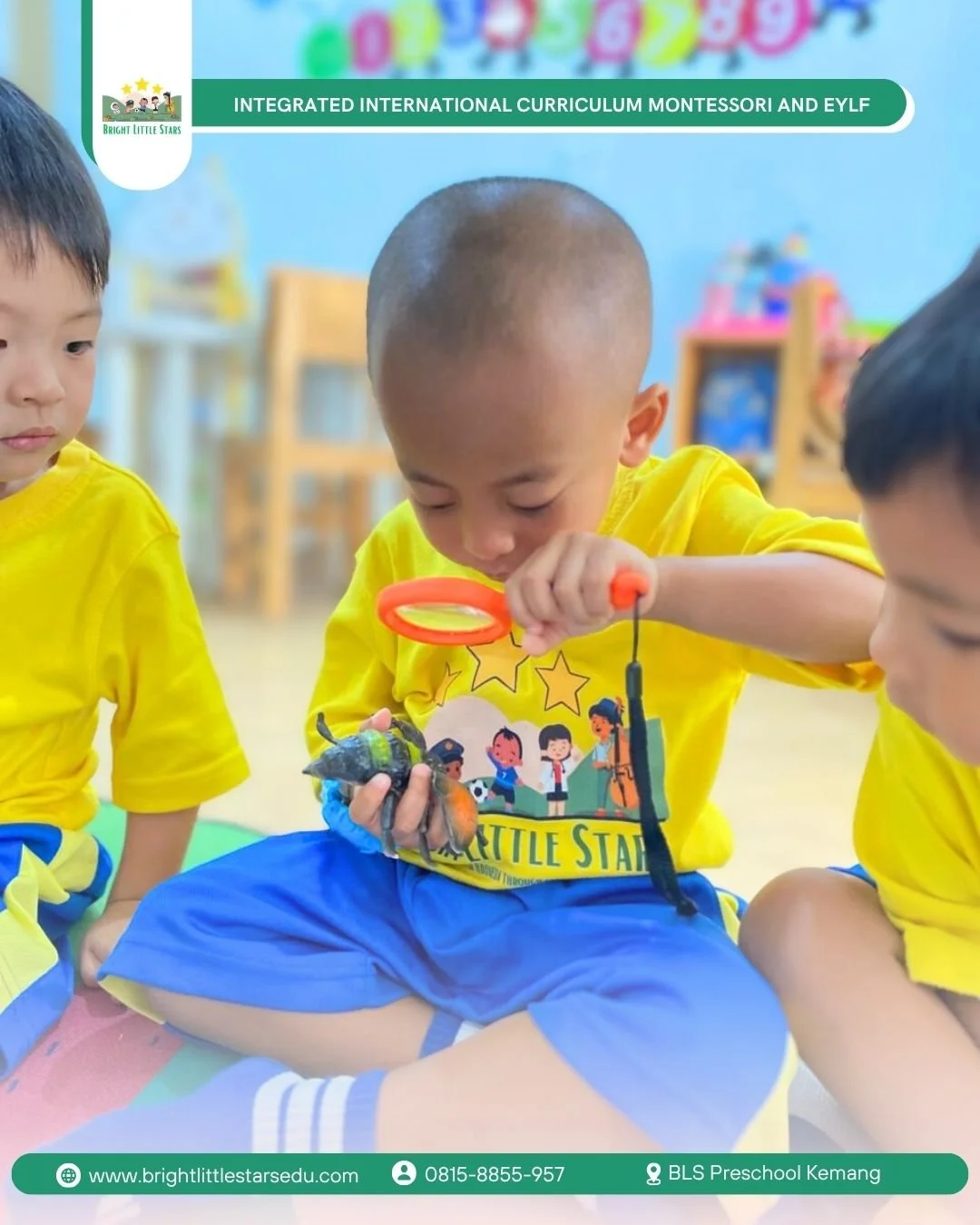
Young children are naturally curious about the world around them, especially when they have the opportunity to observe something interesting up close. At Bright Little Stars Preschool Kemang, STEM activities give children opportunities to explore nature through hands-on experiences that make learning more meaningful.
In this activity, children use magnifying glasses to take a closer look at insects. Instead of simply seeing an insect from a distance, they can carefully observe its body, legs, wings, colors, and other small details.
Using a magnifying glass also encourages children to slow down and pay attention. They may notice features they would not normally see with their eyes alone, helping them understand that even small creatures have unique characteristics.
The activity also encourages children to interact with their environment in a thoughtful way. As they observe the insects, teachers can introduce simple questions such as, “What do you notice?” or “How many legs can you see?” These questions encourage children to look carefully and describe what they see in their own words.
This type of exploration supports the STEM learning approach by introducing children to basic scientific observation in an age-appropriate way. Rather than memorizing information, children learn by looking, noticing, asking questions, and discovering.
Through hands-on insect observation, learning becomes an exciting opportunity to explore the natural world while encouraging curiosity and a growing interest in science.
Building Curiosity and Early Scientific Thinking
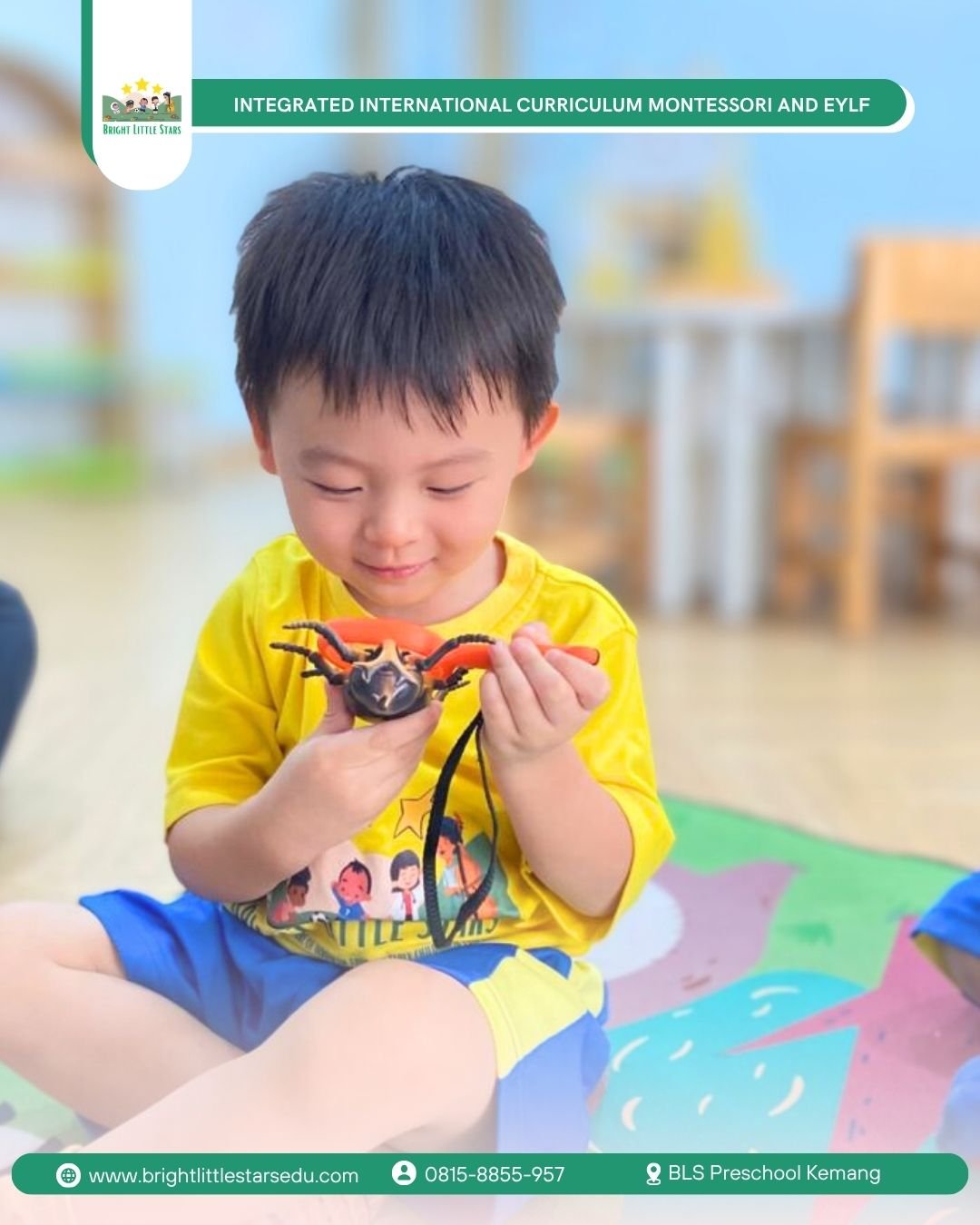
Curiosity is an important part of early learning. When children encounter something unfamiliar, they naturally want to look closer, ask questions, and understand what they are seeing. At Bright Little Stars Preschool Kemang, STEM activities encourage children to follow this curiosity through simple, hands-on exploration.
During the insect observation activity, children have the opportunity to investigate small creatures using magnifying glasses. Looking closely can lead to many simple questions: What does the insect look like? How many legs does it have? Does it have wings? How does it move?
These questions encourage children to observe before reaching conclusions. Instead of simply being given information, they are encouraged to look carefully and share their own observations. This introduces an early form of scientific thinking that is appropriate for preschool-aged children.
The activity also shows children that learning can begin with everyday discoveries. An insect that they might normally walk past can become an interesting subject for investigation when they take the time to observe it.
Teachers can support this process by asking open-ended questions and giving children opportunities to describe what they notice. Their answers may lead to new questions, creating a natural cycle of exploration and discovery.
Through activities like this, children begin developing important learning habits such as asking questions, observing carefully, making comparisons, and communicating their ideas. These experiences help nurture a sense of curiosity that can support learning across many areas.
At Bright Little Stars Preschool Kemang, STEM learning gives children the opportunity to discover that science is not only something found in books—it can also be found in the world around them.
Developing Focus and Observation Skills Through STEM Activities
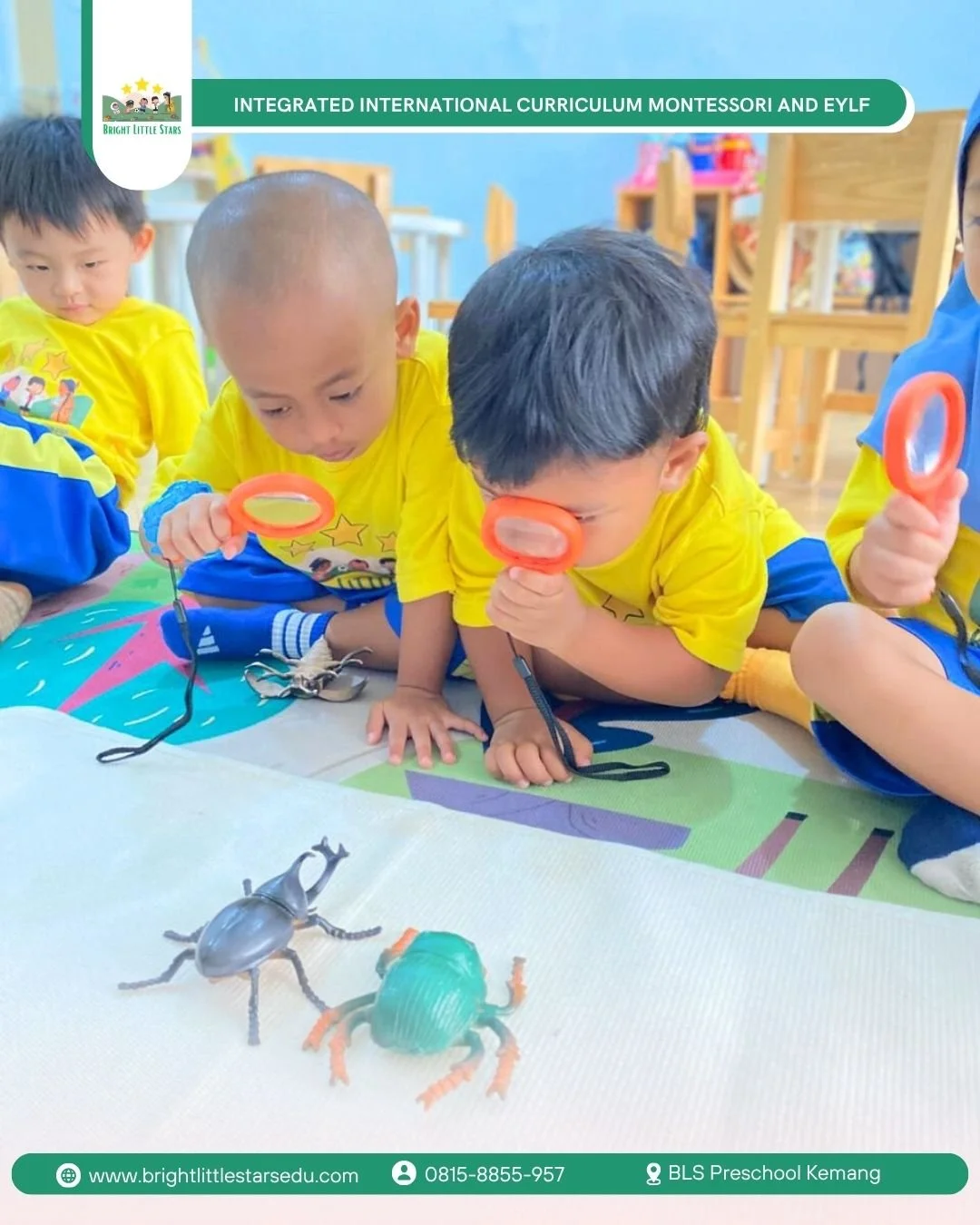
STEM activities can give preschoolers meaningful opportunities to practice focusing their attention on a specific task. During the insect observation activity at Bright Little Stars Preschool Kemang, children are encouraged to slow down, look carefully, and notice details that might otherwise be easy to miss.
Using a magnifying glass makes the experience even more engaging. Children need to position the magnifying glass, adjust their viewing angle, and keep their attention on the insect as they explore its features. These simple actions encourage patience and concentration while making the learning process feel like an exciting discovery.
Careful observation also helps children become more aware of differences and similarities. They may notice the shape of an insect's body, the number of legs, its wings, or the way it moves. By paying attention to these details, children begin practicing skills that are useful for early science and other areas of learning.
The activity can also encourage children to communicate what they discover. After observing an insect, they can describe what they saw, answer questions from their teachers, or share their discoveries with classmates. This creates opportunities to combine observation with language and communication skills.
Most importantly, hands-on STEM experiences allow children to learn through active participation. Instead of simply being told about insects, they have the opportunity to observe and investigate them directly.
Through activities like this, Bright Little Stars Preschool Kemang creates opportunities for children to develop focus, observation, curiosity, and confidence while exploring the world around them.