

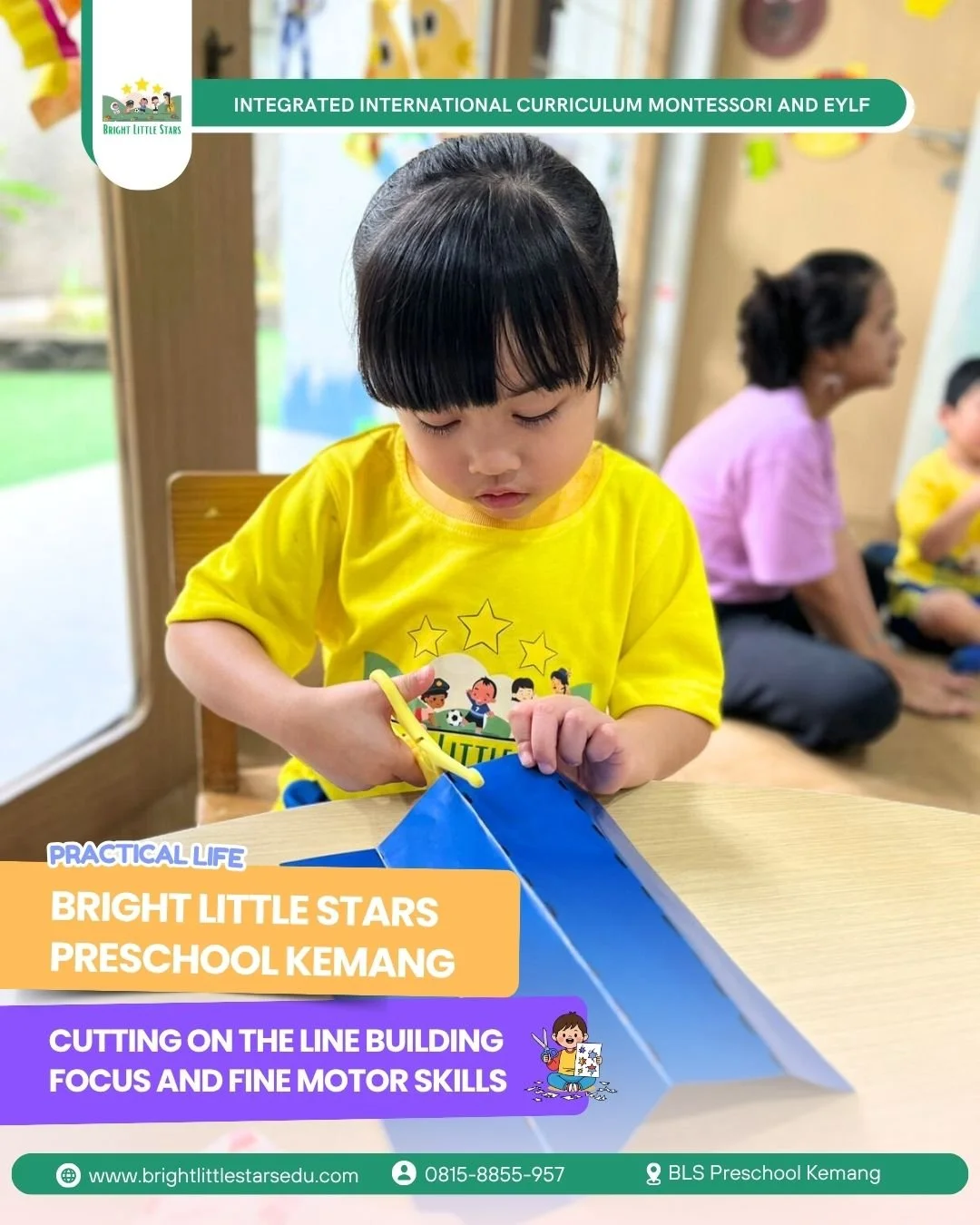
Practical life activities play an important role in developing essential skills during early childhood. At Bright Little Stars Preschool Kemang, cutting along a line gives children a fun, hands-on opportunity to practise using scissors while strengthening their fine motor skills, concentration, and hand-eye coordination. Through this simple activity, children build greater control over their movements and develop important abilities that support their everyday learning and independence.
Strengthening Fine Motor Skills Through Scissor Practice
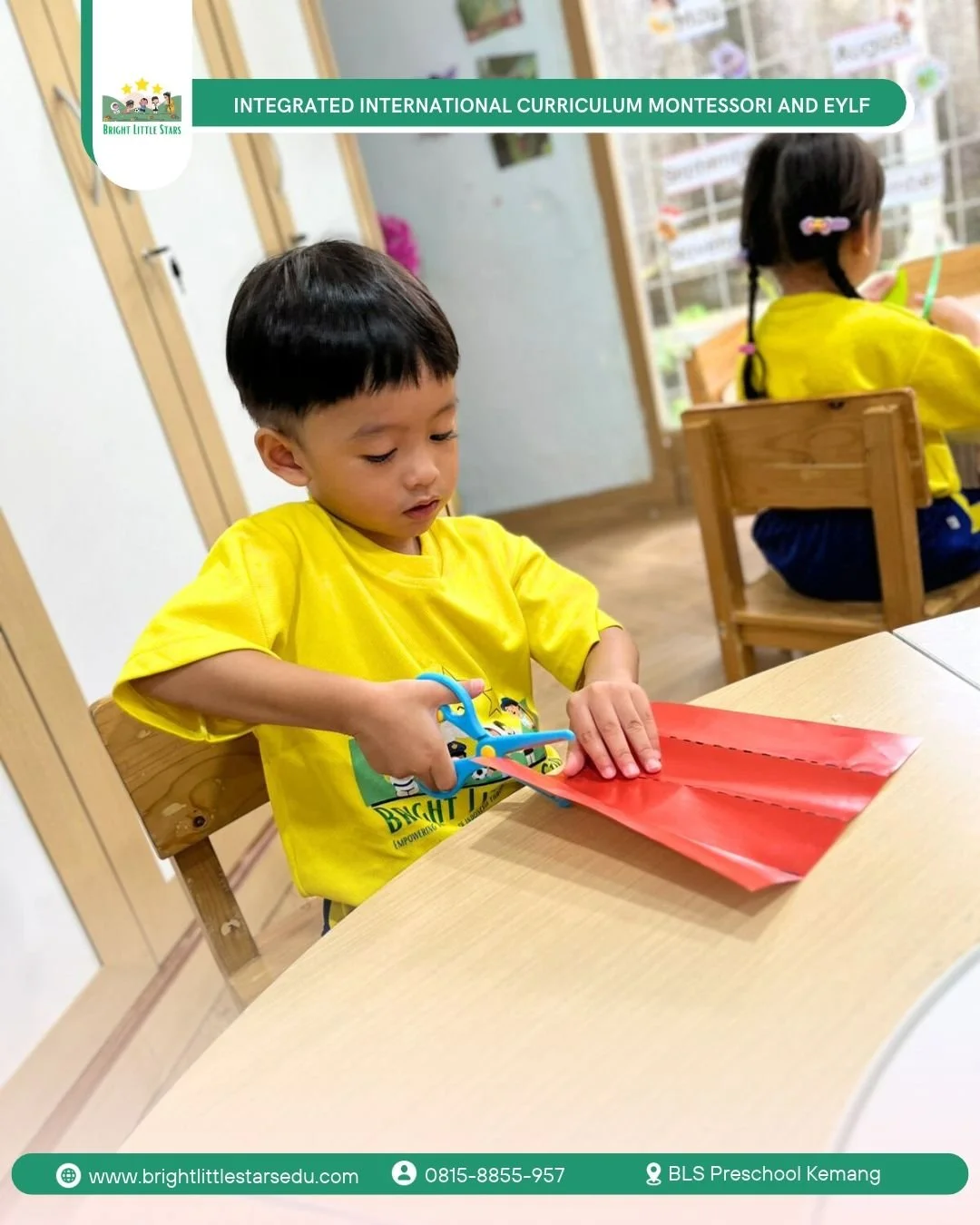
Learning to use scissors is an important part of developing fine motor skills during the preschool years. At Bright Little Stars Preschool Kemang, activities like cutting along a line give children a fun and practical opportunity to strengthen the small muscles in their fingers, hands, and wrists. These muscles play an important role in helping children perform everyday tasks with greater control and precision.
As children practise opening and closing their scissors, they learn to coordinate different finger movements while maintaining a steady grip. Repeatedly squeezing the handles and guiding the blades along the paper helps build hand strength and improve finger control. Although these movements may seem simple, they require practice and coordination to perform successfully.
Developing these abilities is especially important because fine motor skills support many other areas of early childhood learning. Stronger hand muscles and better finger control can help children become more comfortable with activities such as holding pencils, drawing, colouring, buttoning clothes, and handling small objects.
Scissor practice also encourages children to become more familiar with using tools independently and carefully. With child-safe scissors and appropriate teacher guidance, they can gradually improve their cutting technique while learning to handle materials responsibly.
Practical life activities like line cutting turn everyday skills into meaningful learning experiences. Through regular practice, children can develop stronger hands and greater confidence in performing tasks that require precise movements.
Building Concentration and Focus Through Guided Cutting
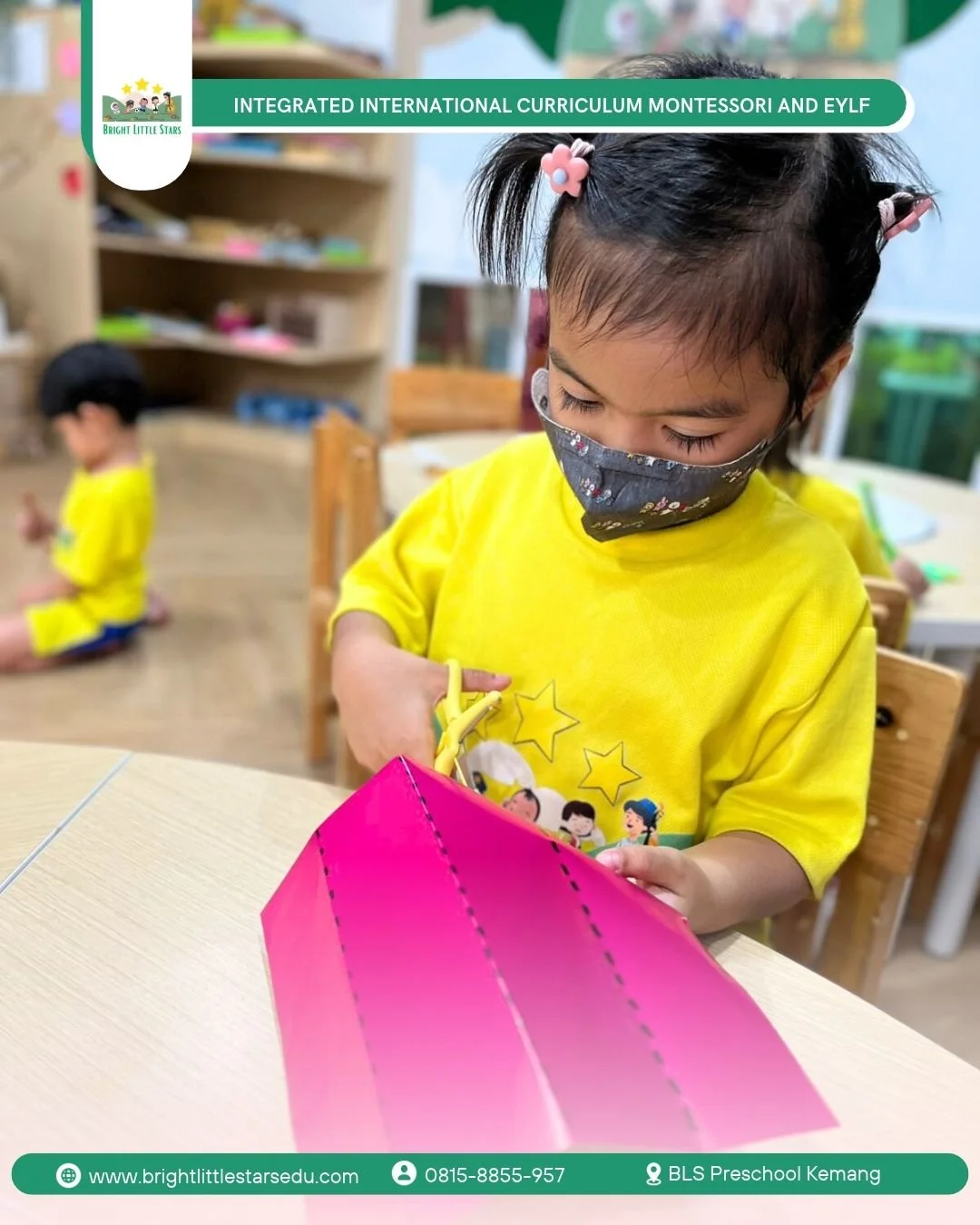
Cutting along a line may seem like a simple activity, but it requires preschoolers to pay close attention and remain focused throughout the process. At Bright Little Stars Preschool Kemang, guided cutting activities encourage children to concentrate on the task while learning to control their movements. They need to observe the line carefully, position their scissors correctly, and follow the path from beginning to end.
As children cut, they must think about each movement and make small adjustments to keep their scissors on the intended path. This encourages them to slow down, work patiently, and pay attention to details. If their cutting moves away from the line, they can pause, reposition their hands, and try to follow the path again.
These experiences help children understand the importance of taking their time when completing a task. Rather than rushing to finish, they learn to focus on the process and gradually improve through practice. This also encourages patience and persistence, especially when an activity requires several careful movements.
Developing concentration at an early age can benefit children in many other learning experiences. Whether they are completing puzzles, colouring pictures, listening to stories, or following classroom instructions, the ability to maintain attention helps them participate more effectively.
Improving Hand-Eye Coordination and Precision
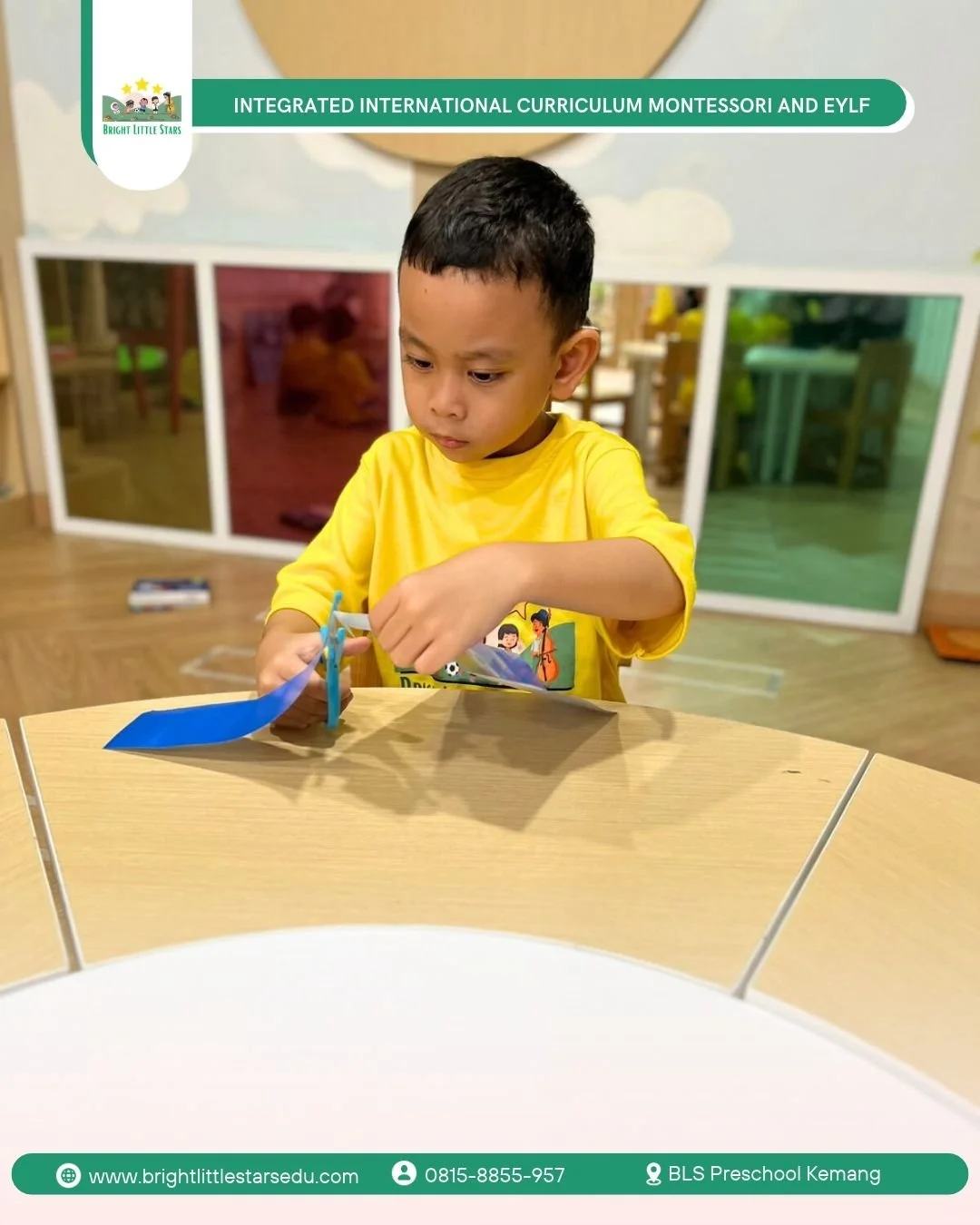
Cutting along a line is a great way for preschoolers to practise hand-eye coordination. During this activity, children must use their eyes to follow the marked line while guiding their hands to move the scissors in the right direction. This helps them learn how to coordinate what they see with their physical movements, gradually improving their control and accuracy.
As children cut through the paper, they need to keep their eyes on the path and adjust the position of their scissors as they move forward. They may need to turn the paper slightly, change their hand position, or slow down to stay close to the line. These small adjustments encourage children to become more aware of their movements and develop greater precision.
Hand-eye coordination is an essential skill that supports many aspects of early childhood development. It plays an important role in activities such as drawing, colouring, building with blocks, catching a ball, and eventually learning to write. By practising coordinated movements through different activities, children become more comfortable handling objects and completing tasks that require accuracy.
Guided cutting activities provide a meaningful opportunity for children to develop these abilities through hands-on exploration. With regular practice and gentle guidance from teachers, children can gradually improve their coordination, control, and confidence when performing tasks that require precise movements.