

Building Core Strength and Coordination Through Physical Activities at BLS Preschool BSD
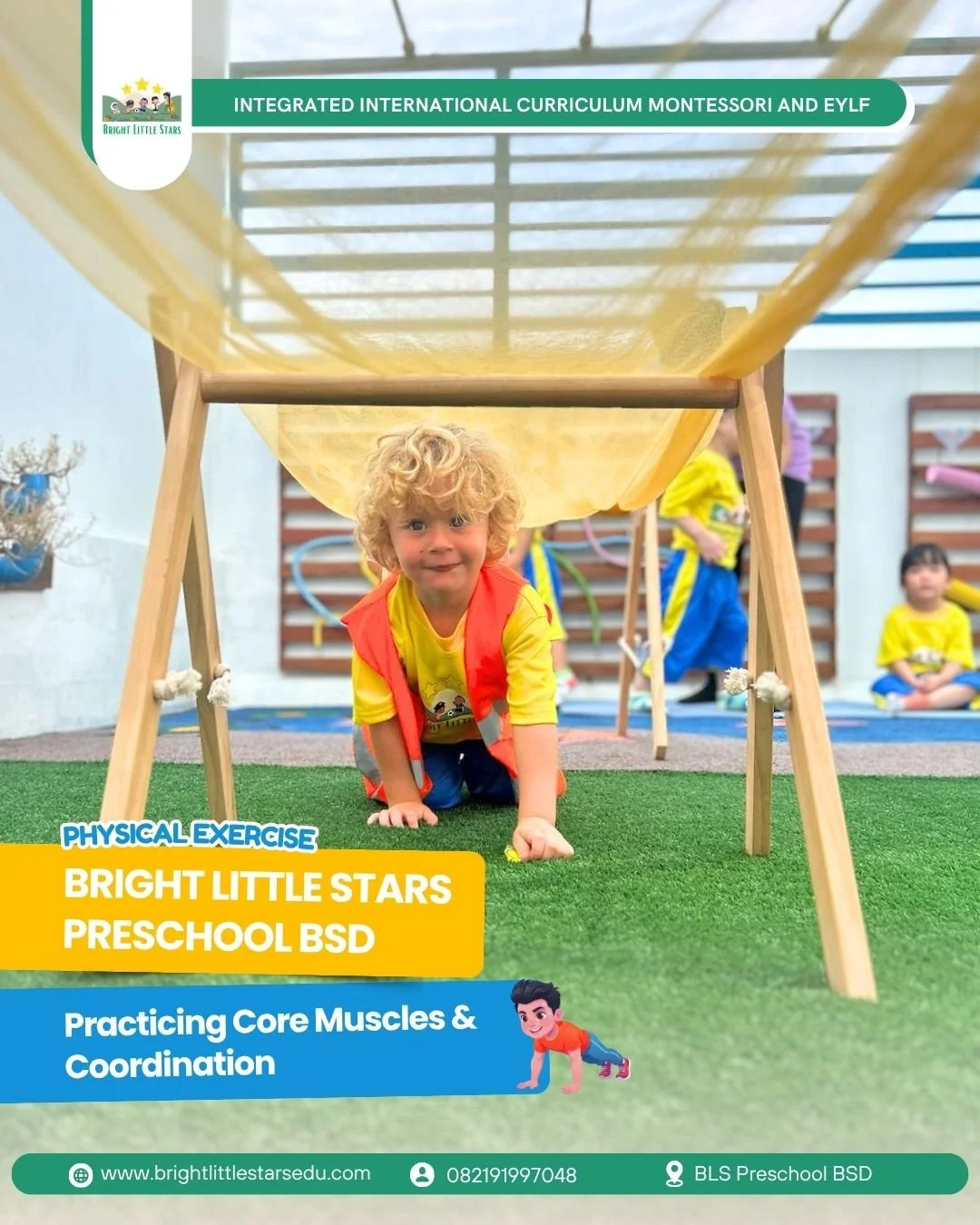
Physical exercise plays an important role in preschoolers' growth and development. Through active play, children can strengthen their muscles, improve coordination, and become more confident in using their bodies. At Bright Little Stars Preschool BSD, engaging activities such as crawling through play structures allow children to develop these essential physical skills while having fun. These hands-on experiences encourage children to explore their abilities, overcome small challenges, and build a strong foundation for healthy physical development.
Strengthening Core Muscles Through Active Play
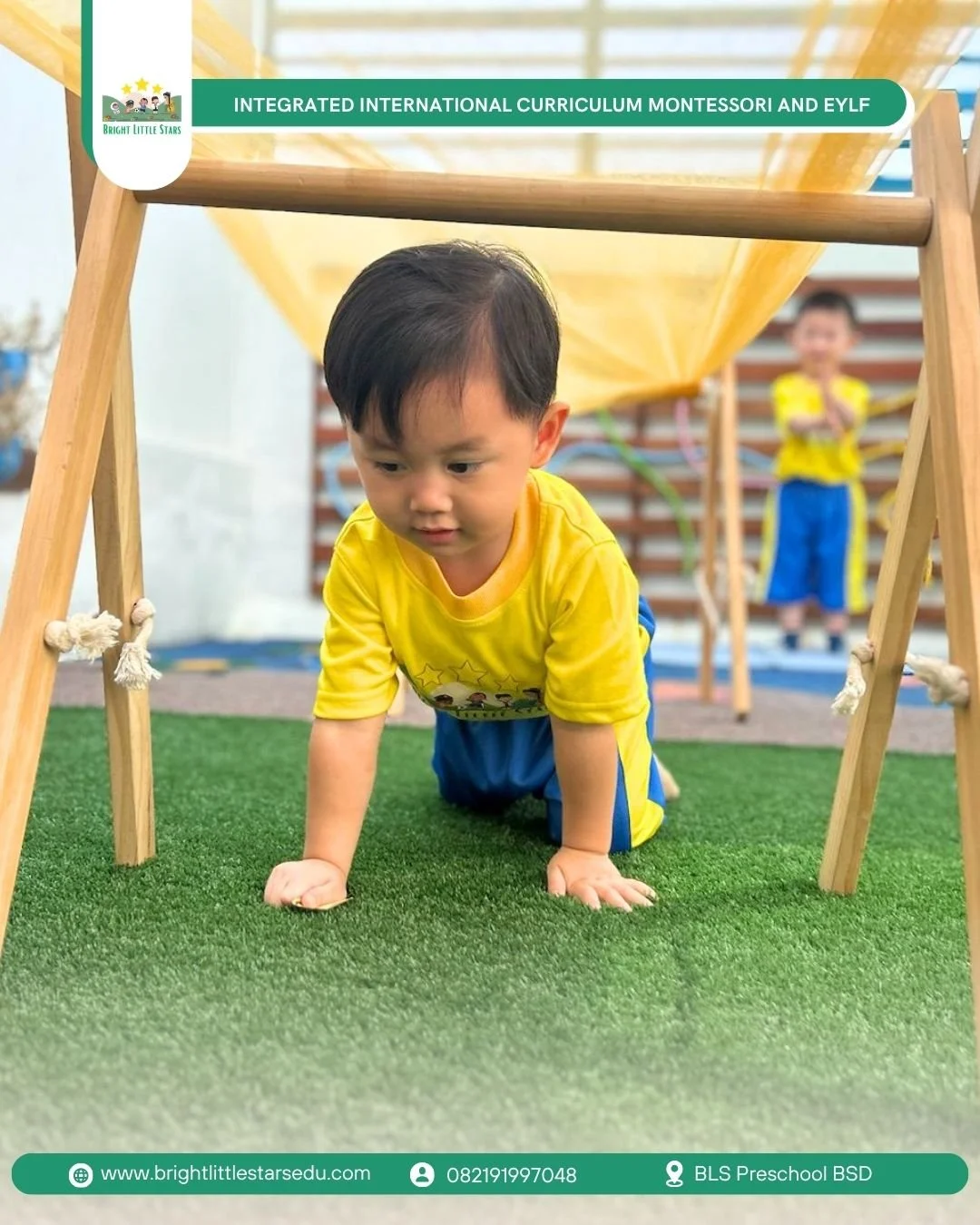
Physical activities give preschoolers valuable opportunities to build strength while having fun. At Bright Little Stars Preschool BSD, crawling through a play structure beneath a suspended fabric encourages children to engage their core muscles as they move forward. These muscles, located around the abdomen and back, help support the body and maintain stability during everyday movements.
As children crawl, they must coordinate their arms and legs while keeping their bodies balanced. Supporting their weight with their hands and knees encourages them to activate different muscle groups, including those that contribute to core stability. Although the movement may look simple, it involves several physical skills working together.
Developing core strength is important during the preschool years because it supports many other physical activities. Stronger core muscles can help children maintain better posture, balance their bodies, and move with greater control. These abilities are useful when running, climbing, jumping, and participating in other playground activities.
Active play also allows children to strengthen their bodies naturally without making exercise feel like a formal task. When an activity feels enjoyable, children are often more motivated to keep moving and explore different ways to use their bodies.
Physical exercises like crawling activities combine movement with meaningful learning experiences. Through regular opportunities for active play, children can gradually develop the strength and stability needed to participate more confidently in physical activities while building healthy movement habits.
Developing Coordination and Body Control
Physical activities that involve crawling and navigating obstacles help preschoolers develop coordination and body control. As children move beneath the suspended fabric at Bright Little Stars Preschool BSD, they must coordinate their arms and legs while carefully guiding their bodies through the available space. This encourages them to become more aware of how their bodies move and how different movements work together.
Crawling requires children to shift their weight, place their hands and knees carefully, and maintain a steady rhythm as they move forward. They also need to adjust their movements according to the space around them. These small adjustments help strengthen their ability to control their bodies while responding to their surroundings.
Developing coordination is important because it supports many everyday physical activities. Whether children are climbing playground equipment, participating in group games, or learning to catch and throw a ball, they rely on coordinated movements to complete these tasks successfully. Better body awareness can also help them move more confidently when exploring unfamiliar physical challenges.
Active play gives children opportunities to practise these skills in an engaging environment. Through repeated movement and exploration, they gradually learn to control their actions, adjust their balance, and coordinate different parts of their bodies. These experiences help build a strong foundation for more complex physical activities as they grow.
Building Confidence Through Physical Challenges
Physical activities give preschoolers opportunities to discover what they can do and develop confidence in their abilities. At Bright Little Stars Preschool BSD, crawling through a play structure beneath suspended fabric encourages children to explore their physical capabilities while working toward a simple goal. As they navigate the space, they learn to approach new challenges with curiosity and a willingness to try.
For some children, moving through an unfamiliar structure may initially feel challenging. They might need time to understand how to position their bodies, where to place their hands, or how to move forward comfortably. With encouragement and opportunities to practise, children can gradually become more comfortable with these movements. Each successful attempt provides a sense of achievement and motivates them to keep exploring.
These experiences also teach children that learning often involves trying more than once. When they encounter a small obstacle, they can practise adjusting their movements and finding another way forward. This helps nurture persistence and a positive attitude toward challenges.
Physical play provides a supportive environment where children can learn at their own pace. Teachers can offer guidance when needed while allowing children to experience the satisfaction of completing tasks themselves. Through these meaningful experiences, children develop greater trust in their abilities and become more willing to participate in new activities, both inside and outside the classroom.